
Utah is a demanding place to build an exterior envelope. Snow loads, wind exposure, high-elevation UV, and frequent freeze-thaw cycles can expose weak details fast. Architectural metal can perform beautifully here, but only when it is designed as a system, not treated as a decorative finish.
Viotell works with homeowners, architects, and builders across Park City and the Wasatch Front to deliver architectural metal that looks sharp and stays tight through real weather. This guide breaks down the climate realities that matter, then walks through the design principles that protect performance, appearance, and long-term value.
Why Utah Is a Tough Test for Exterior Metal
Freeze-thaw cycles and moisture intrusion risk
Moisture finds its way into exterior assemblies through small gaps, imperfect seals, and complex transitions. When that moisture freezes, it expands and stresses joints and materials. This is why drainage design and drying potential matter as much as “watertight” seams. Building Science Corporation’s rain-control guidance emphasizes the role of drainage spaces and how small gaps behind cladding can help manage water. (Building Science)
High UV, elevation, and big temperature swings
Utah’s elevation drives stronger solar exposure and wider daily temperature swings, which increases thermal movement in metal panels and trim. Thermal expansion is predictable, but it must be planned for. One industry example shows a 100-foot panel can change length by roughly 0.78 inches for steel and 1.56 inches for aluminum with a 100°F temperature change. (Metal Sales)
Snow load, drifting, and wind exposure
Snow is not evenly distributed. Drifts form at roof breaks, parapets, valleys, and near taller walls. Wind pushes snow and water into details that never see direct rain in calmer climates. This is where correct terminations, properly flashed transitions, and proven attachment strategies protect the envelope. (Metal Construction Association)
What “Architectural Metal” Covers in a Building Envelope
Architectural metal is a broad category that typically includes:
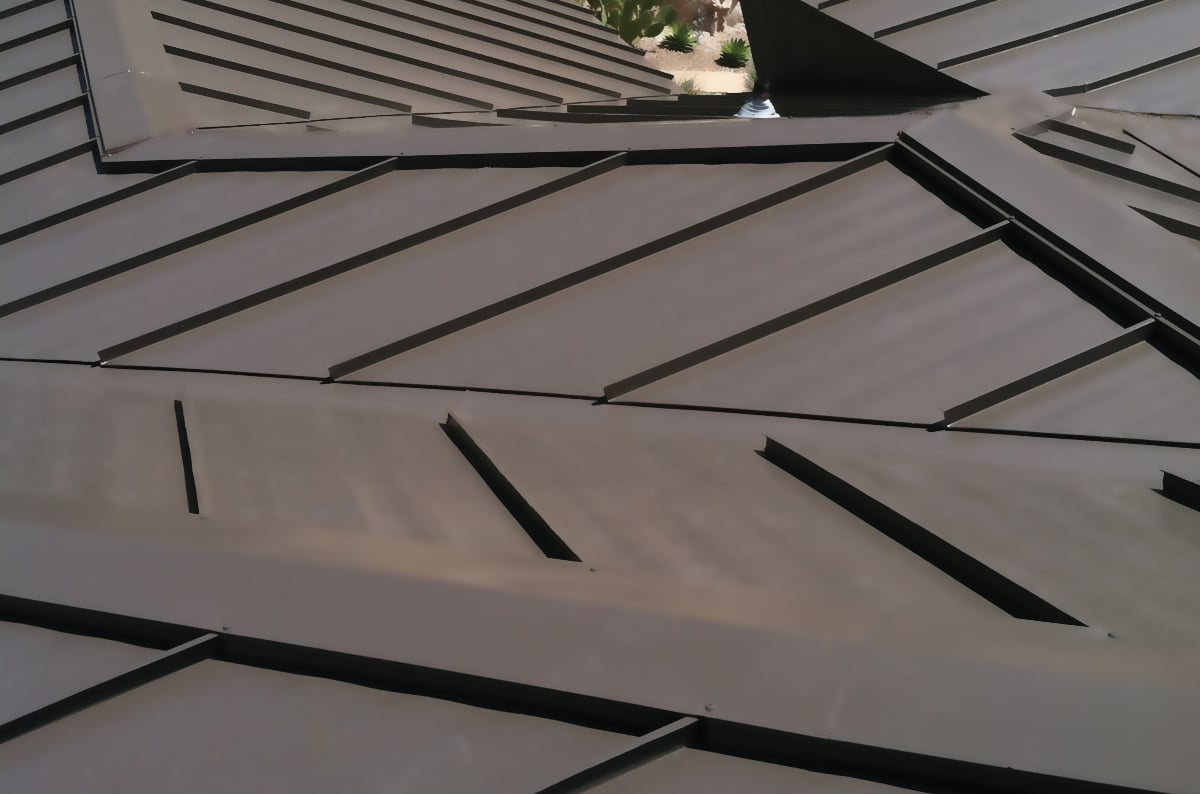
- Metal roofing systems and associated flashings
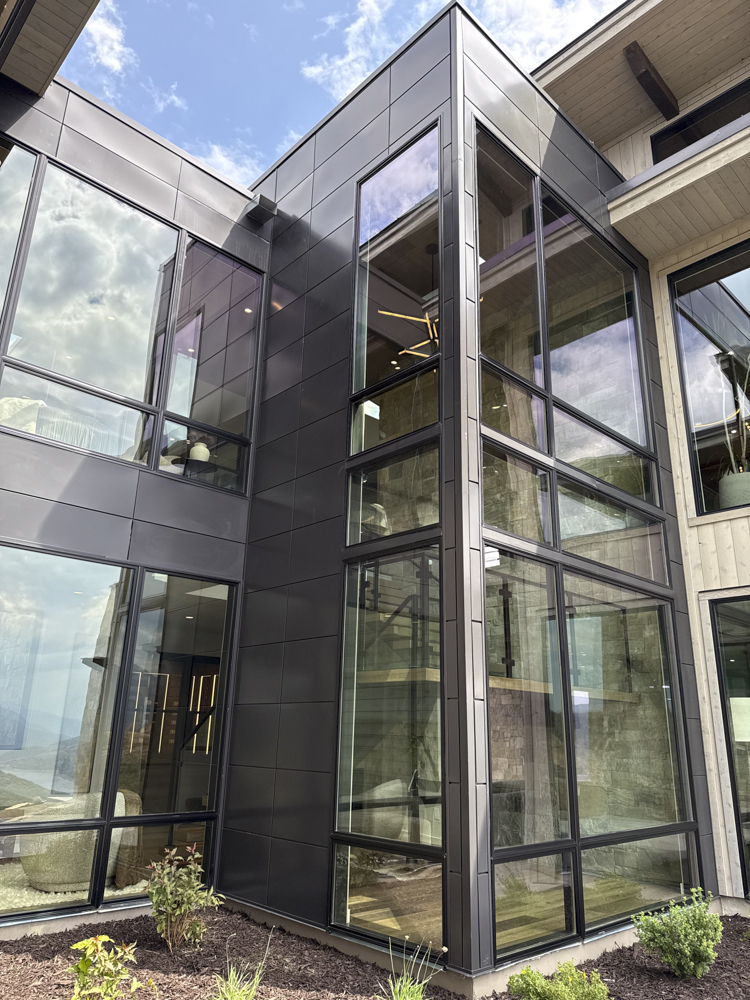
- Metal wall panels and rainscreen components
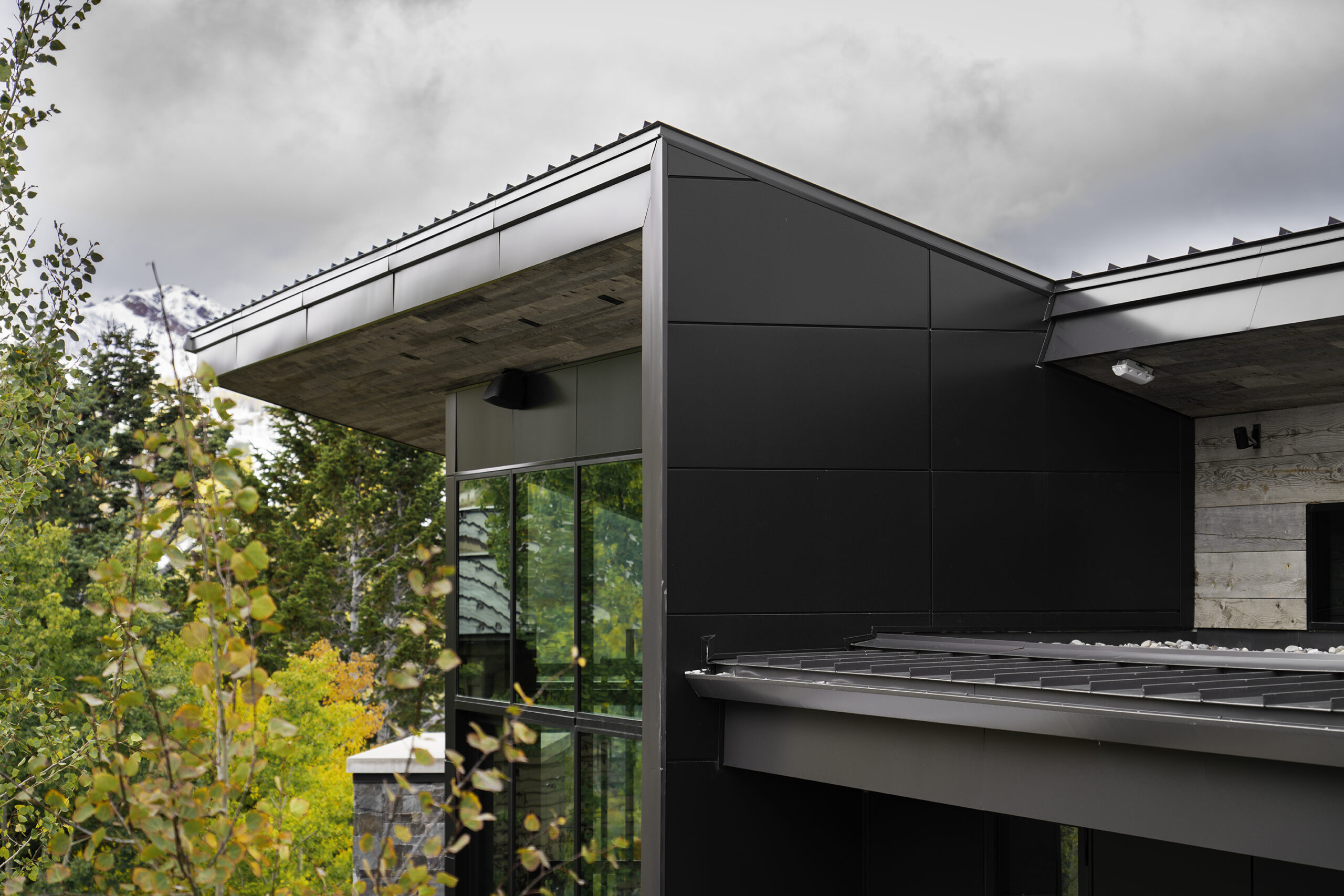
- Soffits, fascia, copings, and trim packages
- Custom chimney caps, crickets, and roof-to-wall transitions
- Decorative and functional accent metalwork
Viotell supports these scopes through integrated services such as metal wall panels, sheet metal fabrication, and metal roofing services. When these pieces are coordinated early, the building looks cleaner, drains better, and needs fewer compromises during installation.
The 6 Design Principles That Keep Metal Looking Great and Performing
Plan for thermal movement and expansion joints
Metal moves. Panels, trims, and long runs of coping and fascia expand and contract with temperature changes. The fix is not over-fastening or forcing alignment. The fix is engineering movement into the system: correct clip spacing, slotted holes where appropriate, expansion joints, and details that allow the metal to move without tearing sealants or deforming seams.
A practical approach is to identify the longest continuous runs early, then coordinate movement breaks with architectural features so expansion joints are placed where they look intentional.
Design drainage paths, not just watertight seams
Utah weather makes a simple truth obvious: water control is layered. A surface joint can fail, snow can drift and melt behind a panel edge, or wind can push moisture through gaps. Drainage planes, flashings, weeps, and clear exit paths provide real protection.
Building Science Corporation’s rain-control work reinforces that a clear space behind cladding supports drainage and drying, and that the geometry of gaps affects how water behaves behind the surface.
Specify compatible metals to reduce galvanic corrosion risk
Dissimilar metals in contact, plus an electrolyte like water, can accelerate corrosion. It is common to see problems when copper, stainless, aluminum, zinc, and galvanized components touch without separation or proper detailing.
The American Galvanizers Association explains galvanic corrosion basics and highlights that the severity depends on metal pairing, environmental conditions, and relative surface area.
The Metal Construction Association also provides guidance on roofing installations and common pitfalls in dissimilar-metal roof details.
Designing for compatibility usually includes:
- Avoiding high-risk metal pairings in direct contact
- Using isolators, coatings, or separation membranes where needed
- Matching fasteners to panel and trim metals
- Thinking through runoff paths so water from one metal is not draining across another
Prioritize air and vapor control layers behind the metal
Architectural metal is an exterior layer. The building still needs a strong water-resistive barrier (WRB), correct air sealing, and appropriate vapor control for the assembly. The metal should support drying and drainage, not trap moisture.
A ventilated and drained cavity behind cladding is a proven strategy in many conditions. Research and guidance on ventilated wall claddings highlights that the cavity must be drained to the exterior and properly flashed at penetrations and transitions.
Use proven attachment methods and correct fasteners
Fasteners are not a small detail. They are a performance element that affects wind resistance, water tightness, long-term movement, and corrosion risk. Technical guidance on fastener compatibility emphasizes selecting fasteners that align with the panel system and environment.
In practice, this means coordinating:
- Fastener material and coating
- Washer type and compression
- Concealed vs exposed fastening strategy
- Clip systems and spacing for movement control
Detail penetrations and transitions with precision
Most failures happen where systems intersect: roof-to-wall transitions, parapets, skylights, chimneys, and mechanical penetrations. In Utah’s climate, these areas also see drifting snow, ice, and prolonged moisture exposure.
This is where custom work changes outcomes. For roof transitions and chimney details, custom chimney caps and purpose-built flashings reduce guesswork and improve fit.
Metal Wall Panels in Utah: Where Performance Is Won or Lost
Rainscreen strategy and ventilation behind panels
Metal wall panels look simple from the street, but the performance comes from what is behind them. A rainscreen approach with a ventilated and drained cavity helps the assembly dry and gives incidental water a way out. Building Science Corporation’s guidance supports providing a clear space behind cladding, with venting at top and bottom for the most effective ventilation.
For projects that prioritize durability, the panel layout, sub-framing, and flashing strategy should be designed together, then field-verified as conditions change.
Corners, parapets, and terminations that prevent failures
Corners and parapets see complex water behavior. Wind pushes water toward vulnerable lines. Snow drifts and melts at edges. Terminations need:
- Clear drip edges and kick-outs where appropriate
- Backing plates or closures that support the profile
- Flashings that control water, not just hide it
- Drainage exits that stay open even in winter conditions
Oil canning expectations and how design choices help
Oil canning is a visual phenomenon that can appear in metal panels depending on finish, panel profile, substrate conditions, and installation approach. It is not always avoidable, but expectations can be managed. Panel selection, stiffening strategies, and realistic finish planning reduce surprises. Installation guides and industry education often reference oil canning as a consideration, especially for long, flat, highly visible panel runs.
Roofing and Architectural Sheet Metal Details for Snow Country
Valleys, eaves, and ice control considerations
Snow concentrates in valleys and at roof breaks. Eaves see repeated freeze-thaw cycles as heat loss from the building melts snow that refreezes at colder edges. Metal roof design guidance for cold climates highlights the importance of experienced detailing for alpine conditions and snow-driven design considerations. (Metal Construction Association)
Snow retention planning around entries and walkways
Metal roofs often shed snow efficiently, which is helpful for load management but can be dangerous near doors, decks, and driveways. Snow retention design should be coordinated with roof geometry and how the property is used. On Park City projects, this planning is part of the overall roof scope, not an afterthought. For local context, explore Park City roofing.
Chimneys, skylights, and roof-to-wall transitions
These details demand precision: correct step flashing, counterflashing, crickets, and water-control layers that work together. Custom fabrication supports cleaner transitions and fewer field compromises, which is why sheet metal fabrication is central to consistent architectural metal results.
Why In-House Fabrication Changes the Outcome
Architectural metal projects rarely go exactly as drawn. Field conditions shift. Substrates vary. Other trades create penetrations. When fabrication is in-house, details can be adjusted quickly, fit can be improved, and quality control stays consistent across the roof and wall package.
This matters for aesthetics, but it matters even more for water control. A trim that fits cleanly drains better and seals more predictably than a trim that was forced into place.
A Simple Spec Checklist for Architects, Builders, and Homeowners
Before finalizing architectural metal selections, confirm:
- What temperature range and panel lengths drive thermal movement requirements? (Metal Sales)
- Where are expansion joints needed, and how will they look on the elevation?
- Is there a ventilated and drained cavity behind wall panels, with clear drainage exits? (Building Science)
- Are metal pairings and fasteners compatible to reduce galvanic corrosion risk? (American Galvanizers Association)
- Are roof-to-wall, chimney, and parapet details fully drawn and reviewed as buildable?
- Are mockups or key detail reviews planned for high-visibility elevations?
For project planning resources and related guidance, visit Resources.
Next Steps for an Architectural Metal Project in Utah
Architectural metal can deliver a clean, premium finish and strong weather performance in Utah, but only when the details respect climate realities. The most productive next step is a review of drawings, elevations, and key transitions, plus a conversation about panel lengths, movement planning, drainage strategy, and metal compatibility.
To discuss an upcoming project, share plans, photos, or scope goals here: Contact Viotell. For envelope integration, explore metal wall panels and metal roofing services.
FAQ
What metals perform best for exterior cladding in Utah?
Several metals can perform well when specified correctly and detailed for movement and corrosion compatibility. The best choice depends on design goals, finish requirements, exposure, and how the metal interfaces with adjacent materials.
How do designers account for thermal expansion in metal panels?
Thermal movement is handled through panel length planning, clip systems, expansion joints, and details that allow controlled movement without stressing seams or sealants. Industry guidance provides coefficients and examples that help predict movement.
How can galvanic corrosion be avoided in architectural metal details?
Avoid direct contact between incompatible metals, use isolation membranes or coatings where required, specify compatible fasteners, and plan runoff paths so water does not carry ions from one metal across another.
Do metal wall panels need a rainscreen gap in Utah?
A ventilated and drained cavity is often a smart approach because it supports drying and provides a controlled drainage path for incidental water. Guidance on ventilated claddings reinforces the value of drainage and flashing continuity.
What are the most common failure points in snow-country metal detailing?
Transitions and penetrations: roof-to-wall intersections, parapets, valleys, chimneys, skylights, and terminations where drifting snow and repeated freeze-thaw cycles increase moisture exposure.