
Not every metal roof is built the same way. Standard metal roofing systems work well for straightforward builds, but when a project involves complex geometry, high snow loads, or design-forward architecture, those off-the-shelf options start showing their limits. For builders working in Utah’s mountain regions, especially around Park City and the Wasatch Front, understanding the difference between custom metal roofing and standard systems can shape how a project performs for decades.
At Viotell Metal Concepts, we fabricate and install custom metal roof systems designed around each project’s specific conditions. Here’s what builders should weigh when choosing between the two approaches.
What Counts as a Standard Metal Roofing System?
Standard metal roofing refers to pre-manufactured panels and profiles that come in fixed sizes, gauges, and finishes. These systems are produced at scale and designed for general use across a wide range of building types.
They work well when roof geometry is simple, slopes are consistent, and the building doesn’t require specialized detailing at transitions. For production-level residential or light commercial projects, standard systems can be a practical, cost-effective choice.
Where they fall short is on builds with steep or irregular roof planes, heavy snow environments, multiple penetrations, or architectural cladding that needs to integrate with the roofline.
What Makes a Custom Metal Roof Different?
Custom metal roofing is fabricated to fit the exact dimensions, angles, and performance requirements of a specific project. Panels, flashings, trim, and transition details are all manufactured in-house or to spec rather than pulled from a catalog. At Viotell, all of this happens at our Salt Lake Valley sheet metal fabrication facility, where components are built to match the roof’s actual geometry.
This approach gives builders control over panel length, seam placement, material gauge, finish, and how the roof ties into walls, soffits, and other envelope components. It also allows for tighter tolerances at flashings and transitions, which is where most roof failures start.
Why Builders in Mountain Climates Lean Toward Custom
Snow load and drainage planning
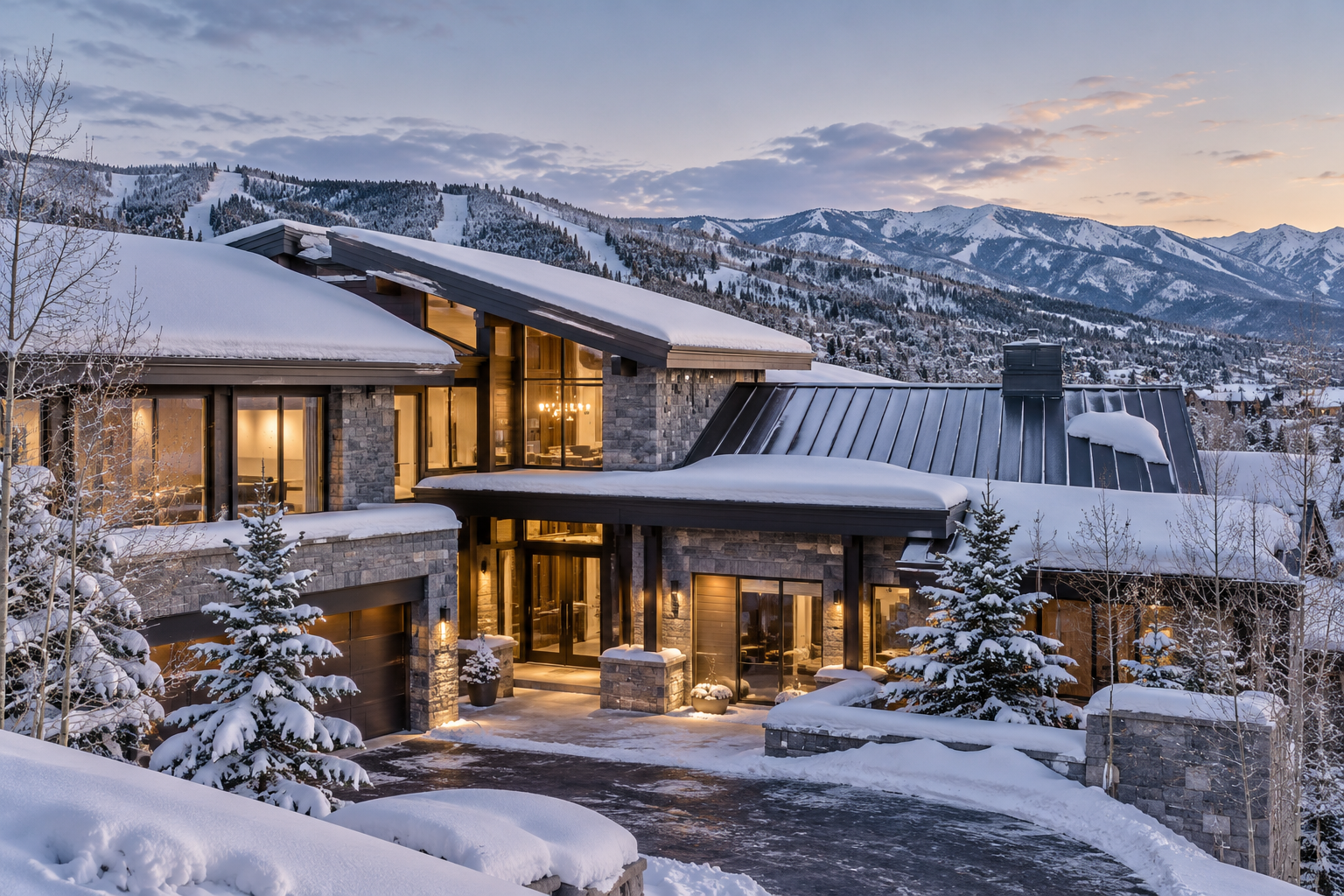
In areas like Park City, where annual snowfall is significant and freeze-thaw cycles are constant, roofing systems need to account for snow load, ice damming, and controlled snow release. Custom systems can be paired with engineered snow management strategies, including snow guards and retention bars that are placed based on actual roof geometry, not a one-size-fits-all layout.
Complex roof geometry
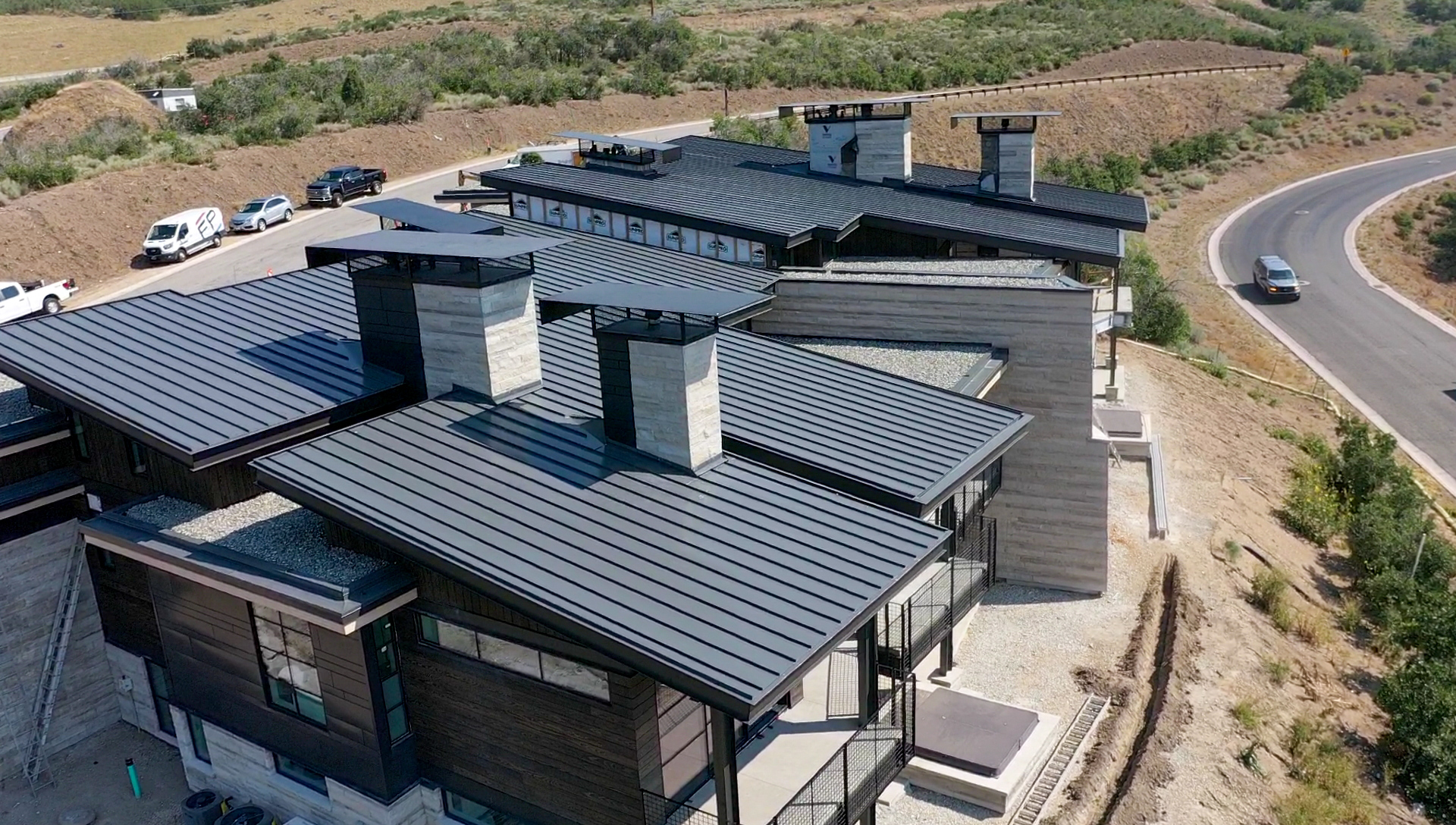
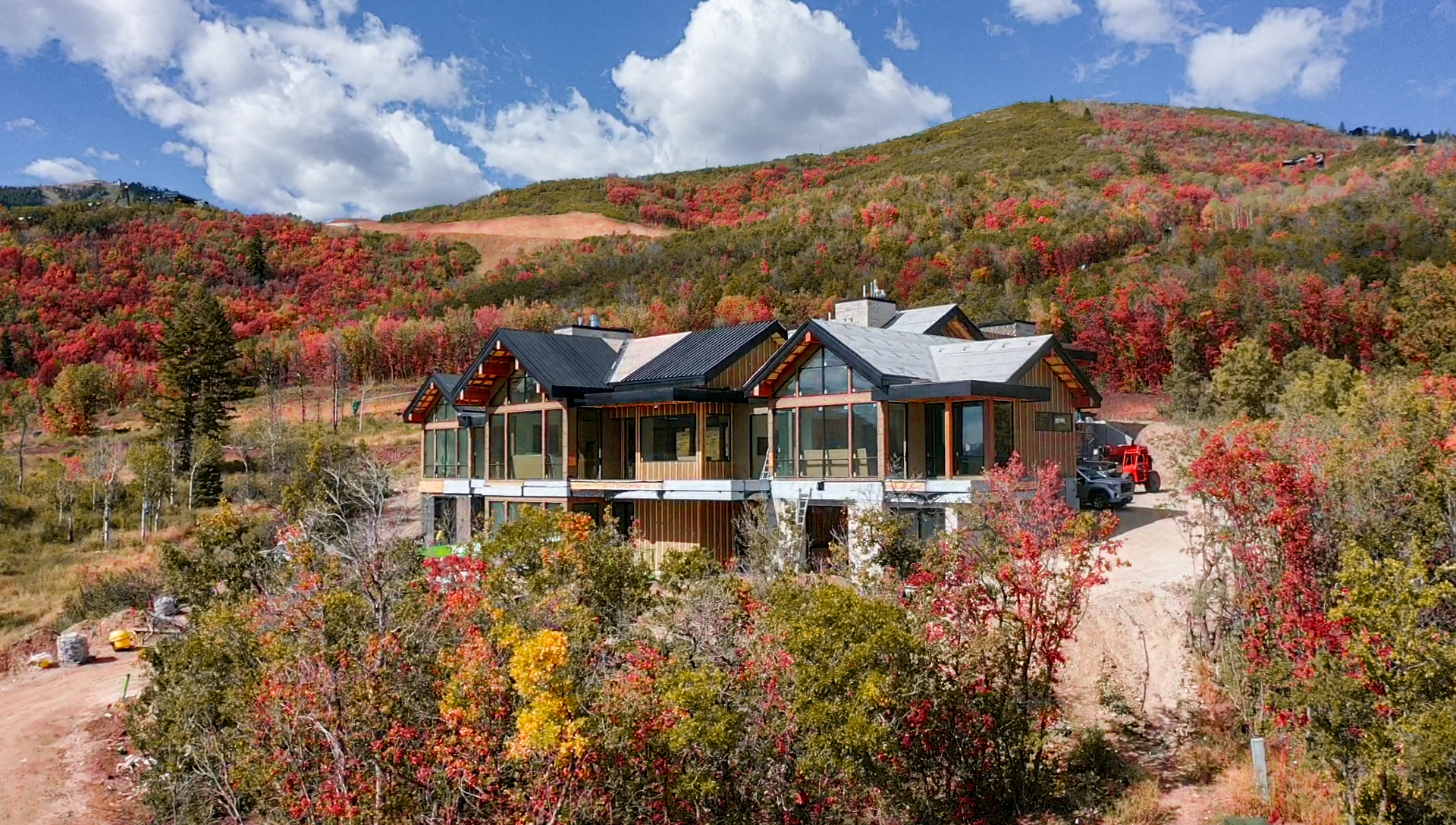
Mountain homes and resort properties often feature steep pitches, multiple valleys, dormers, and mixed materials. Standard panels rarely accommodate these conditions without heavy field modification, which introduces risk. Custom fabrication eliminates that guesswork by building each component to the project’s real dimensions.
Integration with wall systems and cladding
When the design calls for metal wall panels or architectural cladding that needs to tie into the roofline, custom fabrication becomes essential. The roof and wall systems need to work as a coordinated envelope, not two separate installations. That coordination starts in fabrication and carries through installation.
Performance Differences That Show Up Over Time
The gap between custom and standard roofing doesn’t always show up on day one. It tends to reveal itself over the first several winters, when snow loads test flashing details, panel fit, and moisture management. Custom systems built for the actual conditions of a site hold up more consistently because each component was designed for that exact application.
Standard systems can still perform well on the right projects. The issue comes when a standard system gets installed on a building that needed custom detailing, especially around chimney caps, skylights, and wall-to-roof transitions.
Cost Considerations for Builders
Custom metal roofing typically costs more upfront than a standard system. That’s expected. The fabrication process is more involved, the materials are cut and formed specifically for the project, and installation requires skilled labor with experience in complex assemblies.
But the cost comparison shifts when you account for long-term performance. Fewer callbacks, fewer repairs at transitions, and a longer interval before the next major roof project all factor into the total cost of ownership. For builders who are putting their name on a high-end home or commercial property, that long-term performance also protects their reputation.
When Standard Systems Make Sense
Custom isn’t always the right call. For straightforward commercial builds, simple gable roofs, or projects where budget is the primary driver, a standard metal roofing system can deliver solid results. The key is matching the system to the project’s actual demands, not defaulting to one approach across every build.
How Viotell Supports Builders on Custom Projects
Viotell works directly with builders and general contractors from the design phase through installation. We handle in-house fabrication, coordinate with architects and engineers on detailing, and manage installation with our own crew. That means fewer gaps between the plan and the finished product. For builders who want to talk through a specific project, reach out to our team for a quote and consultation.
FAQ
What types of projects benefit most from custom metal roofing?
Homes and commercial buildings with complex roof geometry, steep slopes, heavy snow loads, or architectural cladding that needs to integrate with the roofline. Mountain properties in Park City and across the Wasatch Front are a common fit.
Can a builder use standard panels on part of a project and custom on another?
Yes. Some projects use standard panels on simpler roof sections and custom fabrication where transitions, cladding, or geometry require it. The two can work together when planned from the start.
How long does custom fabrication add to a project timeline?
It depends on the scope, but most custom fabrication adds a few weeks of lead time. That time is often offset by fewer field modifications and a smoother install.
Does Viotell work directly with general contractors?
Yes. Viotell regularly partners with general contractors on roofing, wall panel, and envelope projects across Utah. Learn more about how we collaborate on the partners page.
Is custom metal roofing only for luxury homes?
No. While it’s common on high-end residential projects, custom fabrication is also used on commercial, resort, and multi-family properties where roof conditions or design requirements go beyond what standard products can handle.