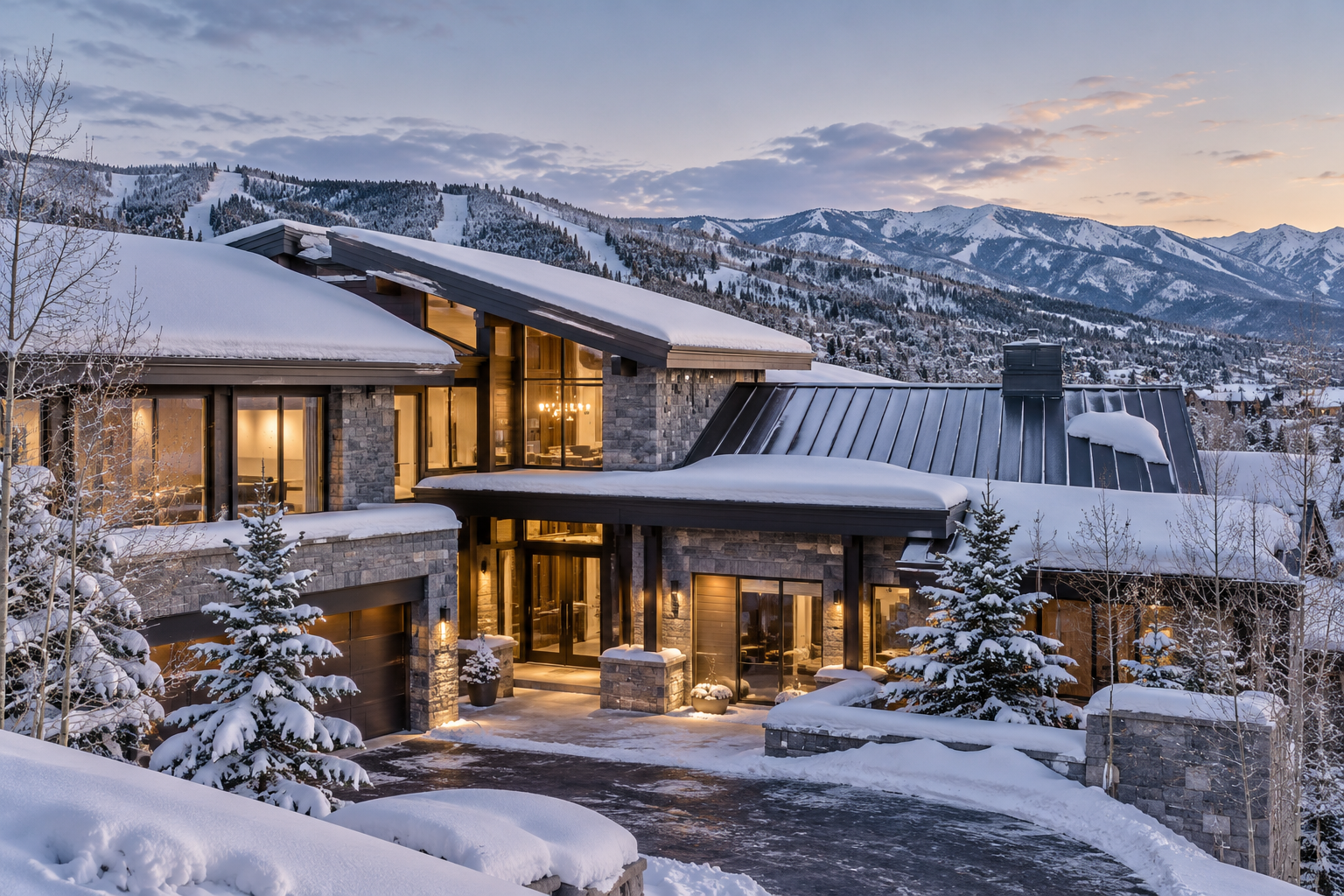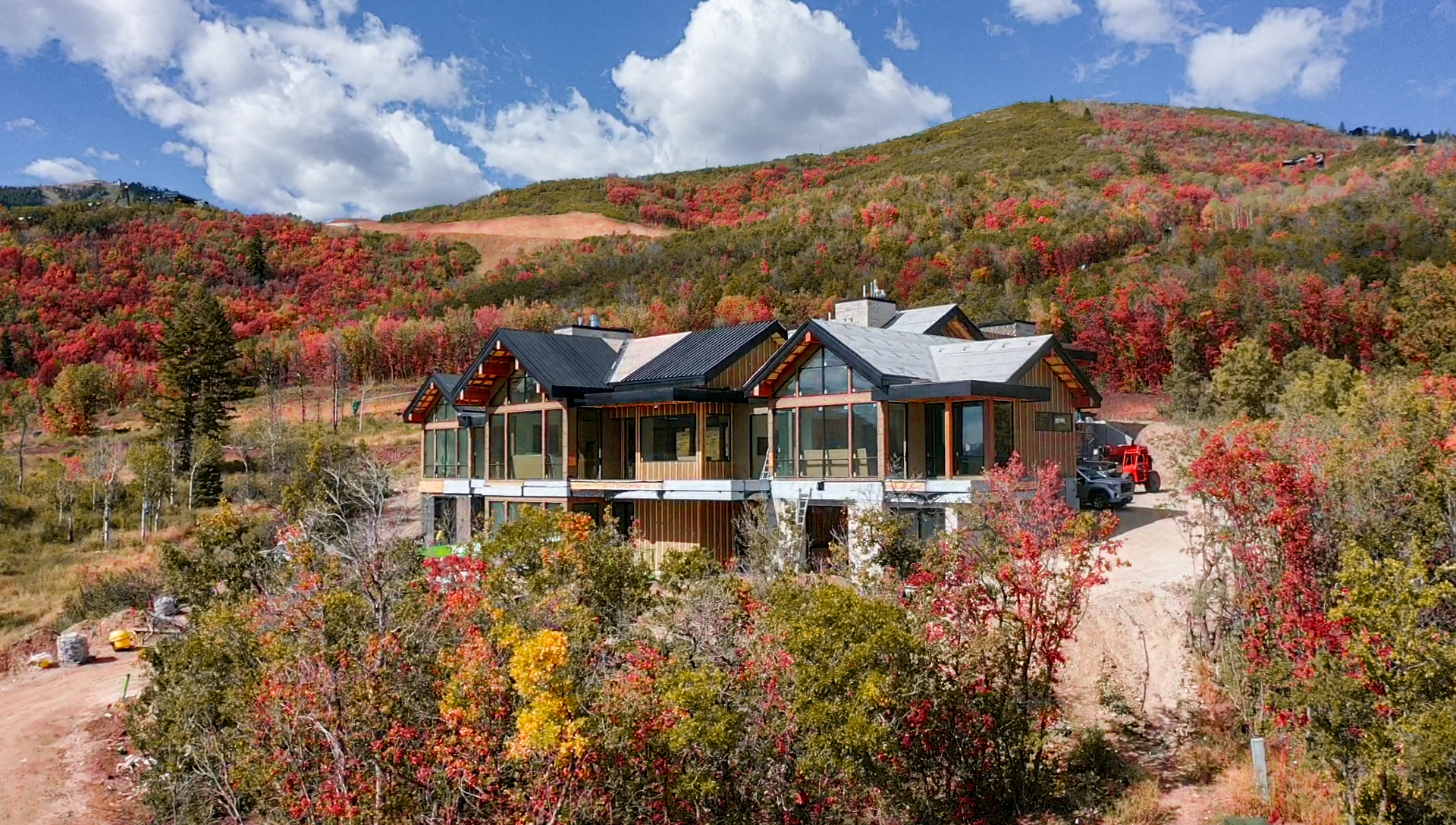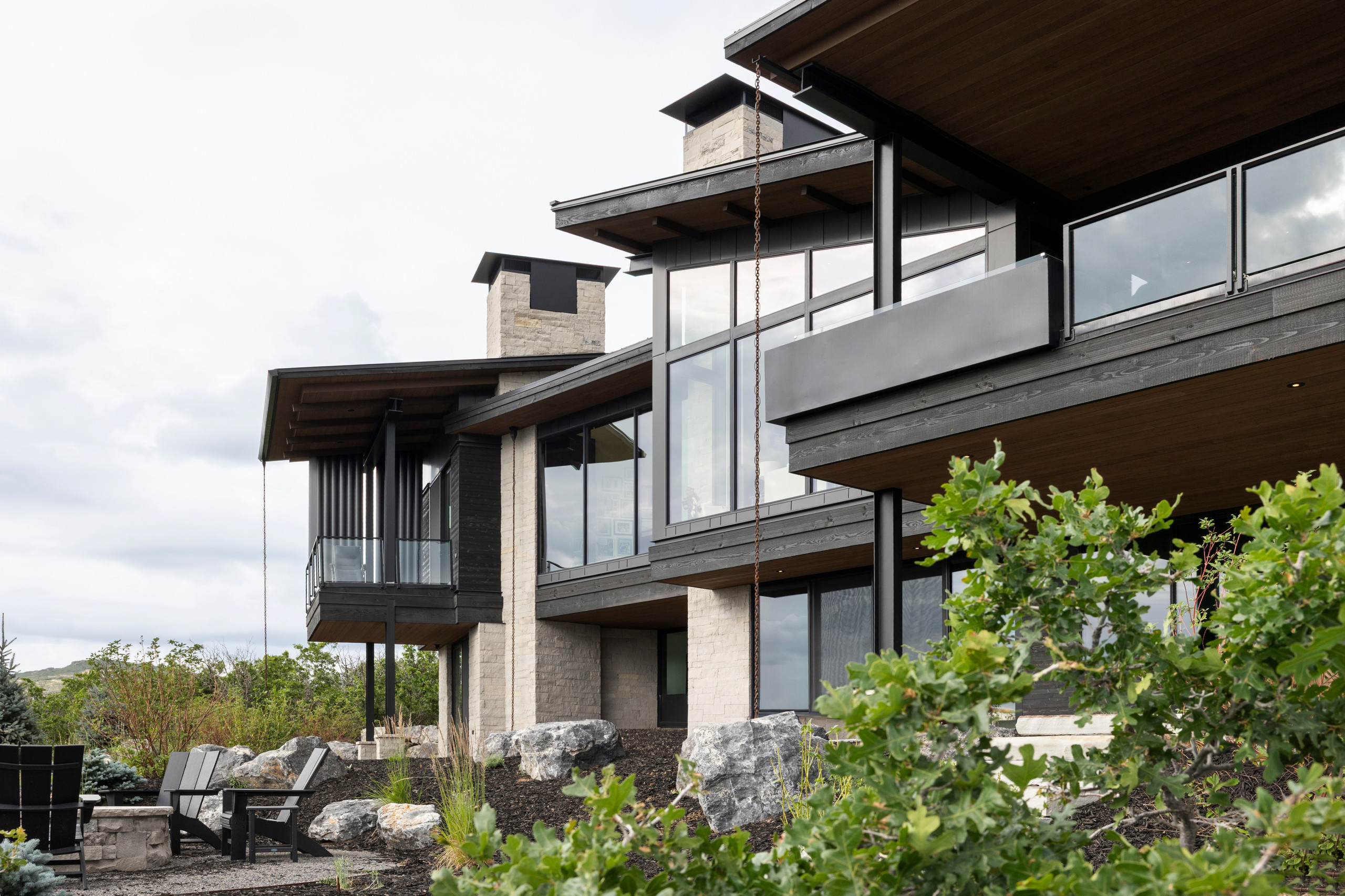

When people talk about the exterior of a home, they often use terms like siding, wall panels, or exterior finishes. Exterior cladding is a broader term for the materials and systems used on the outside of a building to protect the structure while also creating its finished appearance. Cladding can include metal panels, ACM, wood, stone, brick, and other exterior materials. On a custom home, it’s rarely just about picking one material. The real design work comes from deciding how those materials fit together, how they transition around windows and rooflines, and how the system manages water and weather. That’s especially important on modern mountain homes, where the exterior needs to look intentional while handling snow, moisture, wind, UV exposure, and changing temperatures.
What Does Exterior Cladding Do?
Exterior cladding has two jobs that often overlap: protecting the building and contributing to its architecture. The outer layer of the building takes much of the direct exposure to rain, snow, sunlight, and wind. Behind that finished surface are other components that help manage moisture, air, insulation, and drainage. The cladding works as part of that larger exterior assembly. At the same time, cladding has a major influence on how the home looks. The size of the panels, the direction of the joints, the color and finish, and the way the material meets the roof, windows, and other materials can all change the character of the building.
What Materials Can Be Used for Exterior Cladding?
There isn’t one material that’s right for every project. Common exterior cladding materials include:
- Metal wall panels
- ACM panels
- Wood siding
- Stone
- Brick
- Fiber cement
- Composite materials
The right choice depends on the architecture, climate, performance requirements, budget, and the overall material palette. On a modern mountain home, it’s also common to combine several of these materials rather than covering the entire exterior in one finish.
What Is Metal Wall Cladding?
Metal wall cladding is a type of exterior cladding that uses formed or fabricated metal panels to cover portions of the building exterior. It has become popular in contemporary residential architecture because it can create clean lines, large panel formats, and precise transitions. Metal can also be used in several different ways throughout a home. A project might use architectural wall panels across a large facade, then carry the same metal finish into fascia, soffits, entry details, or other areas of the exterior. That continuity can make different parts of the home feel like they’re part of the same design.
What Are ACM Panels?
ACM stands for aluminum composite material. ACM panels are made with aluminum faces bonded to a core and are commonly used for architectural wall applications. They’re particularly useful when a project calls for large, clean panel surfaces and a consistent architectural finish. The important distinction is that ACM is one type of cladding system. Not every metal wall panel is ACM, and the best choice depends on the specific design, application, and performance requirements of the project.
Is Exterior Cladding Part of the Building Envelope?
Yes, but cladding is only one part of the building envelope. The building envelope includes the complete system separating the interior from the outside environment. That can involve the roof, walls, windows, doors, insulation, air and moisture barriers, flashing, and drainage. Cladding sits on the exterior of that larger assembly. That’s why choosing a cladding material isn’t just a design decision. How that material is attached, drained, flashed, and transitioned into the rest of the exterior can have just as much impact on long-term performance.
How Does Exterior Cladding Manage Water?
This is one of the areas where exterior cladding gets more technical than it may appear. The goal isn’t necessarily to make the outer cladding layer completely responsible for keeping every drop of water out. Instead, a properly designed wall assembly uses multiple layers and details to control water and give moisture a predictable path away from the building. Flashing, drainage planes, joints, transitions, and ventilation can all play a role depending on the system. This becomes particularly important when different materials meet. A metal panel might transition into stone, wood, a window opening, or the roof system, and each connection needs to be considered as part of the larger exterior assembly.
Why Do Architects Use Multiple Cladding Materials?
A home doesn’t have to use one exterior material everywhere. In fact, some of the most interesting mountain homes use several materials to create contrast and define different parts of the architecture. Metal might be used to emphasize a clean roofline or modern facade. Stone can anchor the lower portion of the home. Wood can add warmth around an entry or outdoor living area. The challenge is making those materials feel connected. That comes down to proportion, color, texture, transitions, and the details between them.
How Does Cladding Work With the Roof?
The roof and wall system shouldn’t be treated as two completely separate parts of the house. Roof edges, fascia, soffits, flashing, and wall cladding all meet at different points around the exterior. Those transitions can be especially noticeable on modern homes where rooflines are intentionally exposed and materials meet with very little visual interruption. A well-coordinated roof-to-wall transition helps the exterior look cleaner while also addressing water management and long-term performance.
Is Metal Cladding a Good Choice for Mountain Homes?
It can be. Metal cladding is well suited to many modern mountain homes because it can provide a clean architectural appearance while standing up to demanding exterior conditions when the appropriate system and finish are selected. But the material itself isn’t the only consideration. Elevation, snow, UV exposure, temperature changes, drainage, installation details, and how the panels connect to the rest of the building all need to be considered. A good cladding system should make sense for both the design and the environment.
How Do You Choose the Right Exterior Cladding?
The best exterior cladding usually comes from looking at the entire home rather than choosing a material in isolation. Consider the architecture first. Then look at the climate, exposure, surrounding materials, desired appearance, maintenance expectations, and how the cladding will transition into the roof, windows, doors, and other exterior systems. For a luxury home, those transitions can be just as important as the material itself. The goal isn’t simply to find a cladding product that looks good on a sample board. It’s to create an exterior where the materials, details, and building systems all make sense together.
Final Thoughts
Exterior cladding is one of the most visible parts of a home, but it’s doing more than creating a finished surface. It’s part of the building’s exterior system, and the way it’s designed and installed can influence both appearance and long-term performance. Metal panels, ACM, stone, wood, and other materials can all work beautifully in the right application. What matters most is how they’re selected, detailed, and brought together. On a custom mountain home, the best exterior isn’t necessarily the one with the most materials. It’s the one where every material has a purpose and the transitions between them feel intentional.
Frequently Asked Questions
What is exterior cladding?
Exterior cladding refers to the materials and systems installed on the outside of a building to protect the structure and create its finished exterior appearance.
What is the most common type of exterior cladding?
There isn’t one universal option. Metal, wood, stone, brick, fiber cement, composite materials, and ACM are all used depending on the building and design.
Is metal cladding the same as metal siding?
Not necessarily. Metal cladding is a broader term that can include different types of architectural metal wall systems. Metal siding can refer to more conventional siding products and profiles.
Are ACM panels exterior cladding?
Yes. ACM panels are one type of exterior cladding system commonly used for architectural wall applications.
Is exterior cladding part of the building envelope?
Yes, cladding is one component of the larger building envelope. The envelope also includes systems such as roofing, insulation, waterproofing, windows, doors, flashing, and drainage.
Is metal cladding good for mountain homes?
Metal cladding can be a strong choice for mountain homes when the material, finish, attachment system, drainage, and detailing are appropriate for the project’s climate and design.