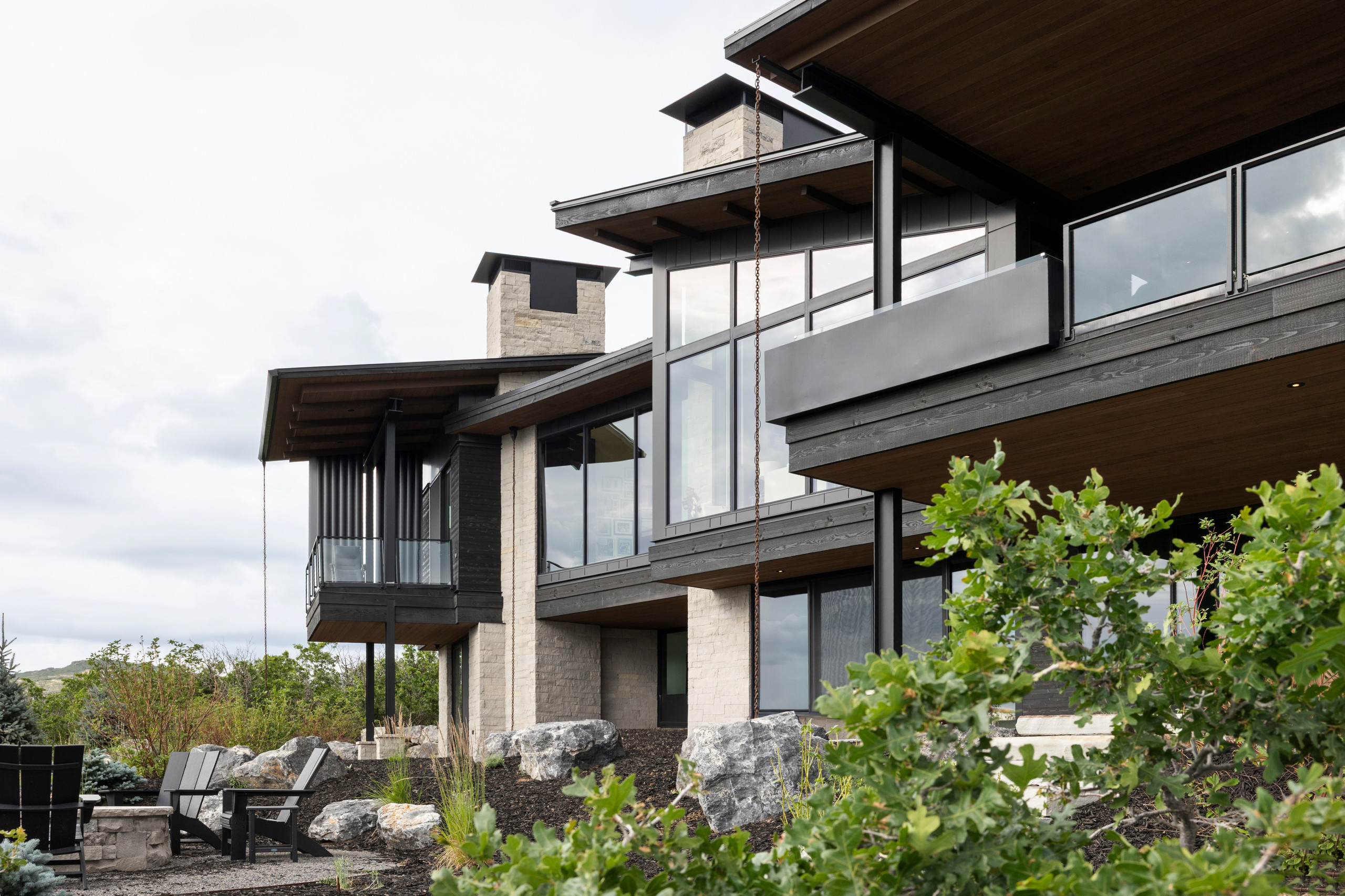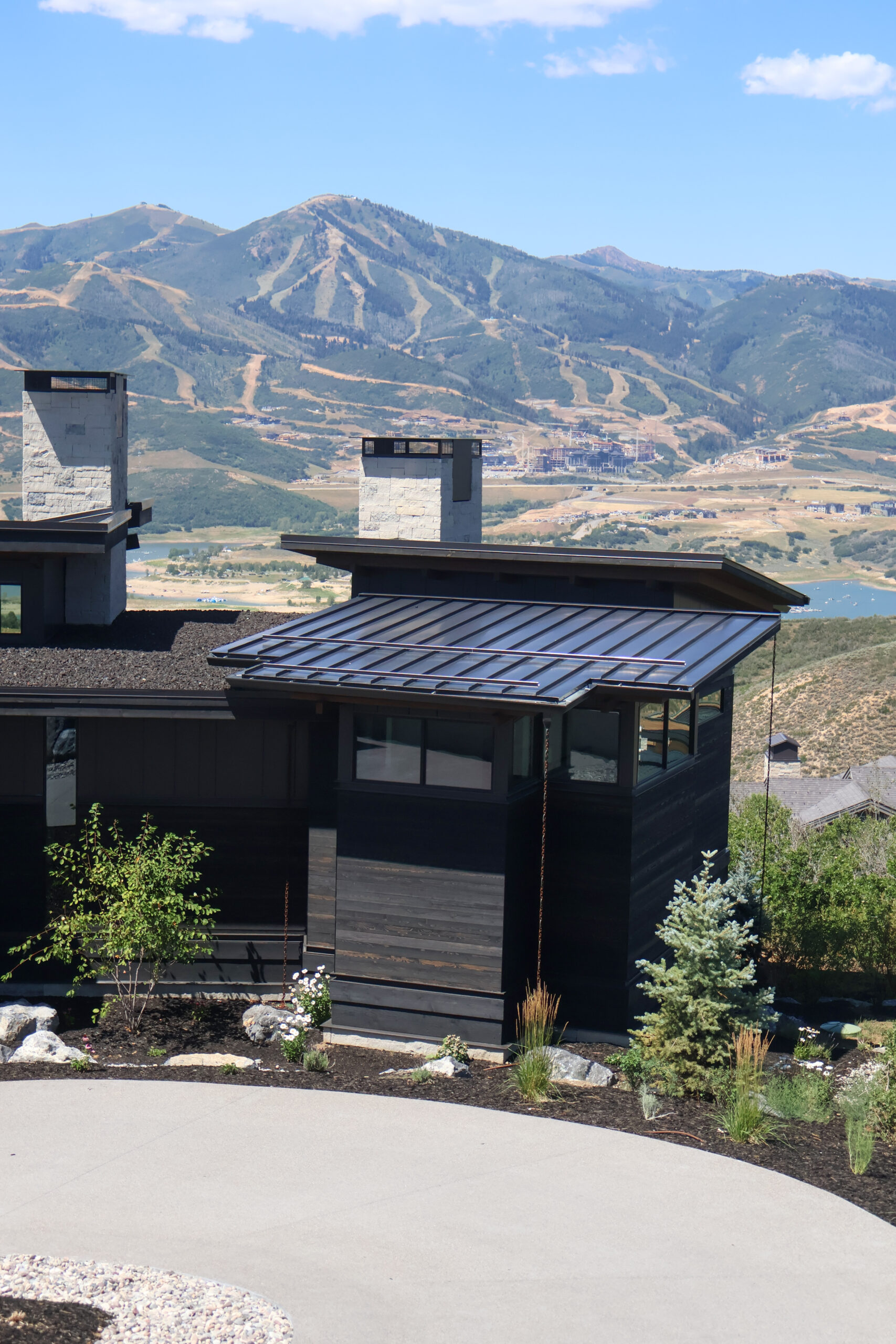

Modern mountain homes have evolved significantly over the last decade. While natural materials like stone and wood remain staples in mountain architecture, today’s homes often blend multiple exterior material combinations to create a balance of durability, architectural interest, and long-term performance.
In places like Park City and throughout Utah, exterior material selection is about more than aesthetics. Homes have to withstand heavy snow loads, freeze-thaw cycles, intense UV exposure, and dramatic temperature swings throughout the year. The right combination of materials can help a home perform better while also creating a more cohesive architectural design.
For homeowners planning a custom build, architects refining a vision, or builders coordinating multiple trades, understanding how exterior materials work together is an important part of the design process.
Why Material Combinations Matter
A well-designed exterior is rarely built from a single material.
Most modern mountain homes combine several systems to create contrast, improve durability, and support long-term performance. Rather than relying on one material across the entire structure, designers often use different materials to highlight architectural features, add visual balance, and address the unique demands of a mountain climate.
The most successful projects treat roofing, wall systems, trim details, and drainage components as part of a unified exterior design rather than individual selections made in isolation.
Popular Exterior Material Combinations for Modern Mountain Homes
Some of the most common combinations seen throughout Park City and other mountain communities include:
- Metal roofing with natural stone
- Metal roofing with wood accents
- Wall panels paired with stone
- Metal roofing, wall panels, and wood
- Stone combined with wood and architectural metal details
Each combination creates a different architectural feel while offering its own advantages in terms of maintenance, longevity, and weather performance.
Metal Roofing and Natural Stone
One of the most timeless combinations found in luxury mountain homes is metal roofing paired with natural stone.
Metal roofing offers durability, snow-shedding performance, and clean architectural lines. Stone introduces texture, warmth, and a connection to the surrounding landscape. Together, they strike a balance between modern design and mountain tradition.
This pairing works particularly well for homeowners looking for an exterior that feels sophisticated without being trendy. It offers a high-end appearance while standing up to decades of exposure in Utah’s climate.
Metal Roofing and Wood Accents
Wood remains one of the most effective ways to soften modern architecture.
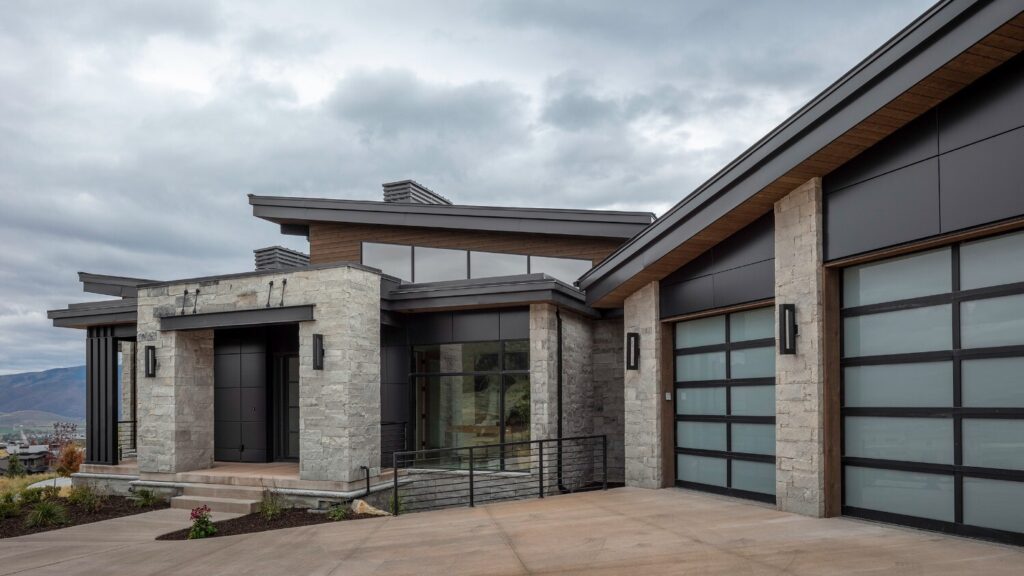
Many contemporary mountain homes use metal roofing as the primary roofing system while incorporating wood through soffits, entry features, exposed beams, or accent walls. The contrast between sleek metal surfaces and natural wood elements adds warmth and character without sacrificing a clean, modern aesthetic.
For homeowners who appreciate contemporary design but still want their home to feel inviting and connected to its environment, this combination offers the best of both worlds.
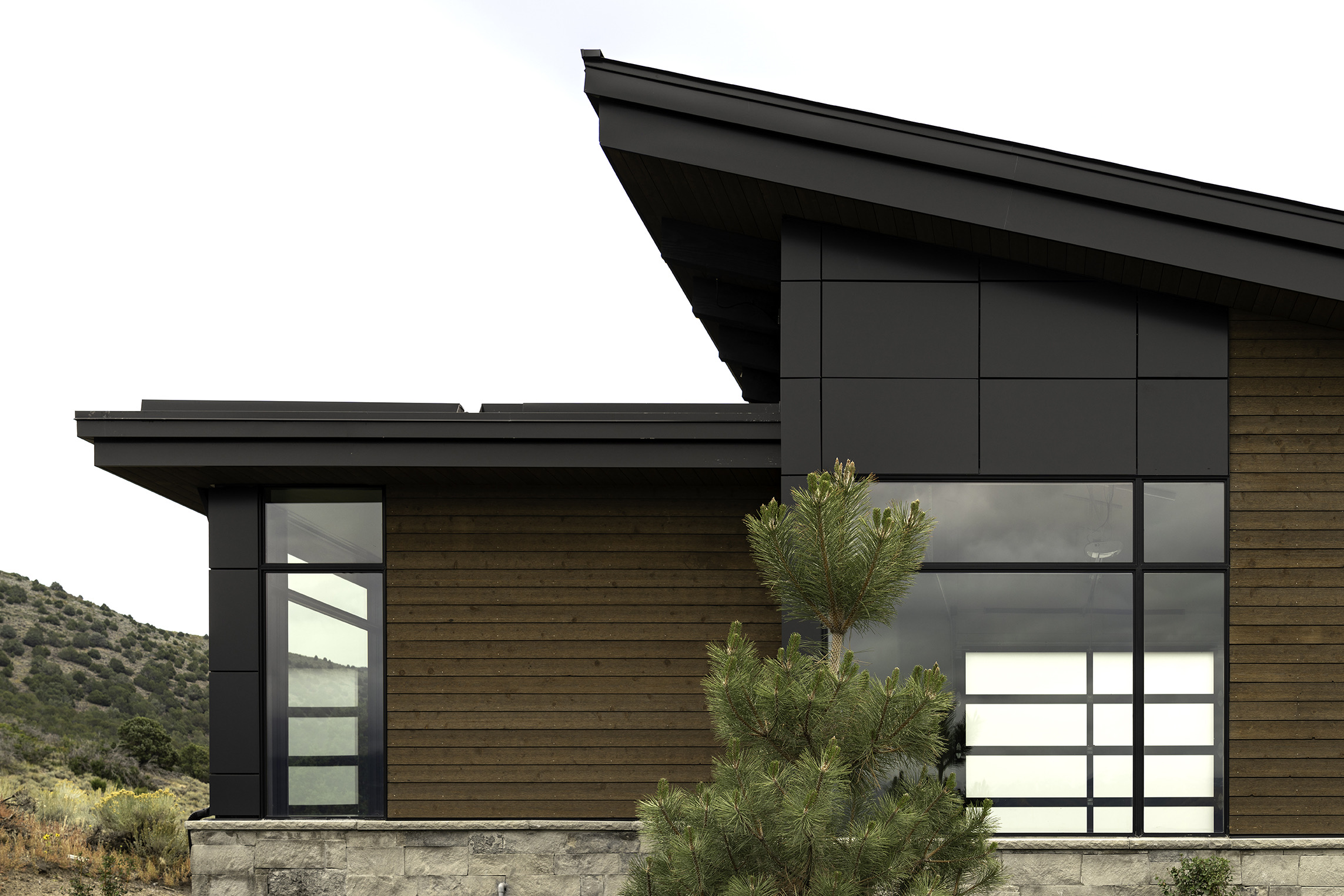
Wall Panels and Stone
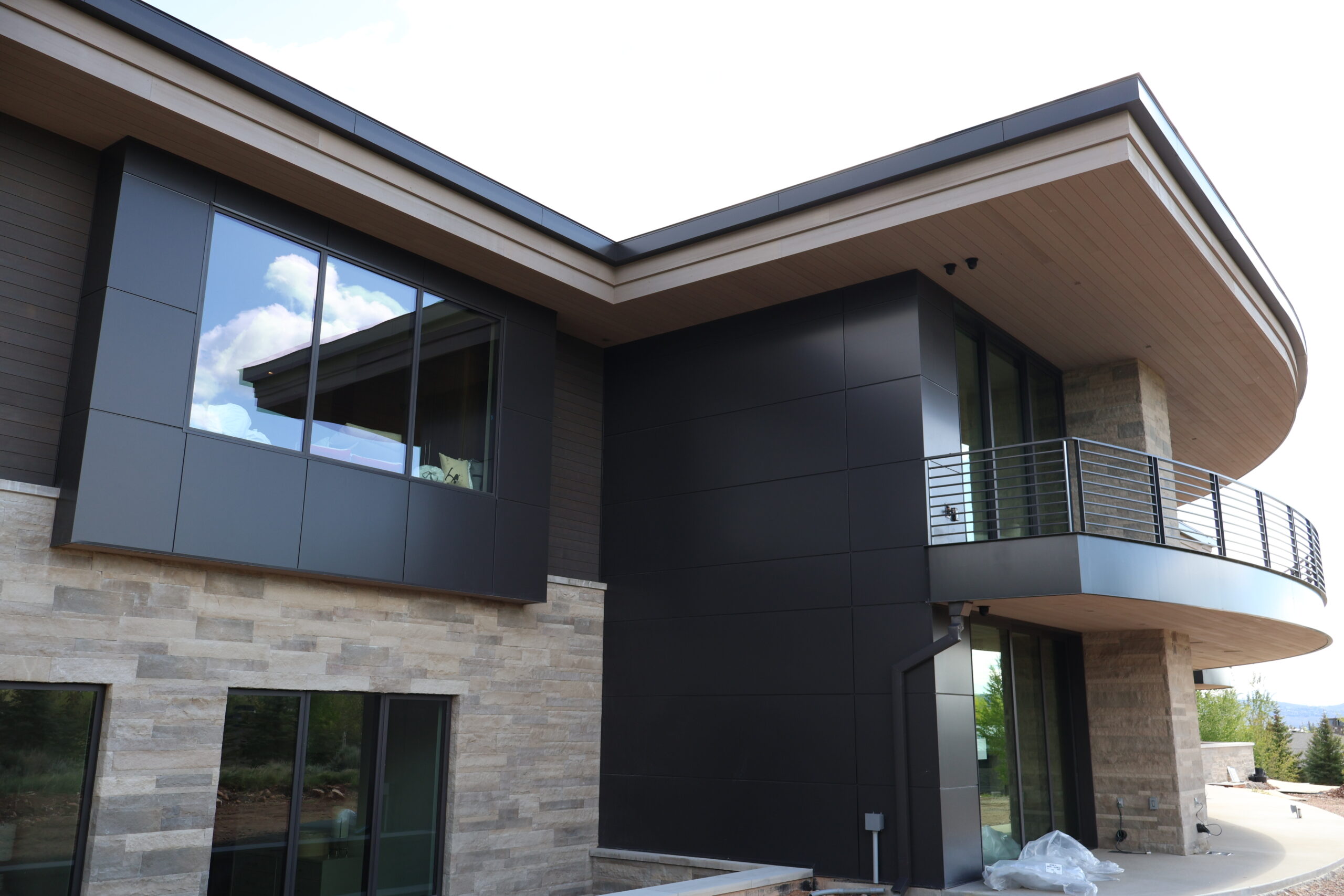
Exterior wall panels have become increasingly common in modern mountain architecture, especially in custom homes designed with simpler forms and larger expanses of glass.
When combined with natural stone, wall panels help create clean lines while maintaining visual depth and texture. The smooth surfaces of the panels contrast beautifully with the rugged nature of stone, creating a look that feels refined yet grounded.
This approach is often used on homes featuring contemporary rooflines, large window openings, and minimalist detailing. It also reinforces something many architects know well: the smallest details often have the biggest impact. Decisions around transitions, reveals, and moisture management can influence not only how an exterior looks, but how it performs over time.
The result is an exterior that feels intentional, where the materials not only complement one another visually but also work together to withstand the demands of mountain living.
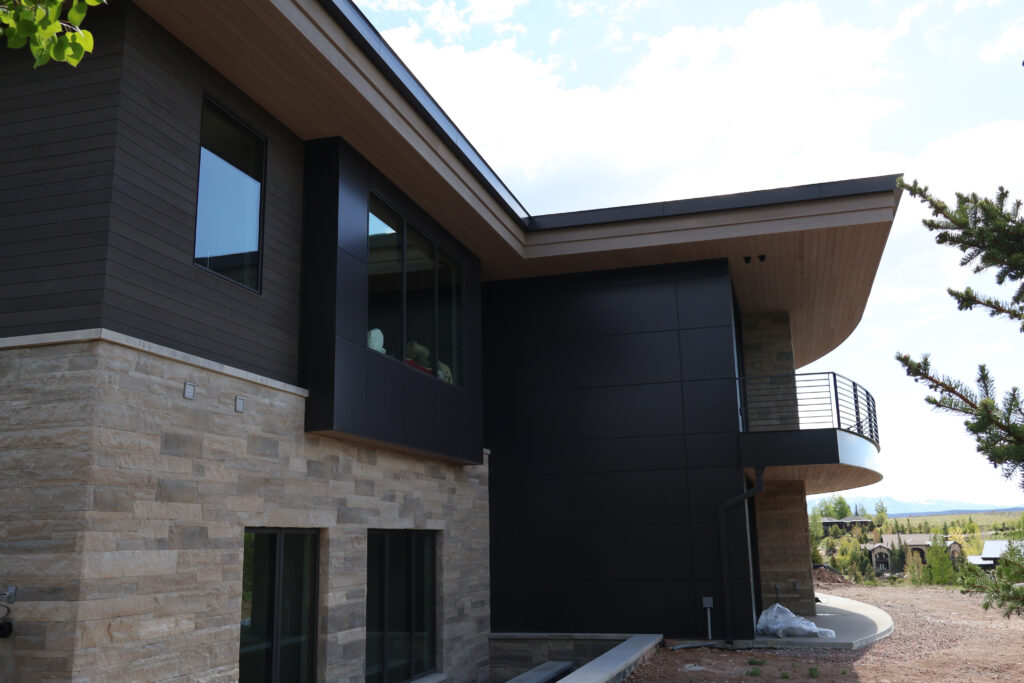
Metal Roofing, Wall Panels, and Wood
Many of today’s luxury mountain homes combine all three materials.
Metal roofing provides durability and architectural definition. Wall panels create clean exterior surfaces, while wood introduces warmth and natural character. When used thoughtfully, these materials work together to create a cohesive exterior that feels modern without becoming cold or overly industrial.
It’s a combination that has become increasingly popular throughout Park City because it balances aesthetics, long-term performance, and maintenance considerations.
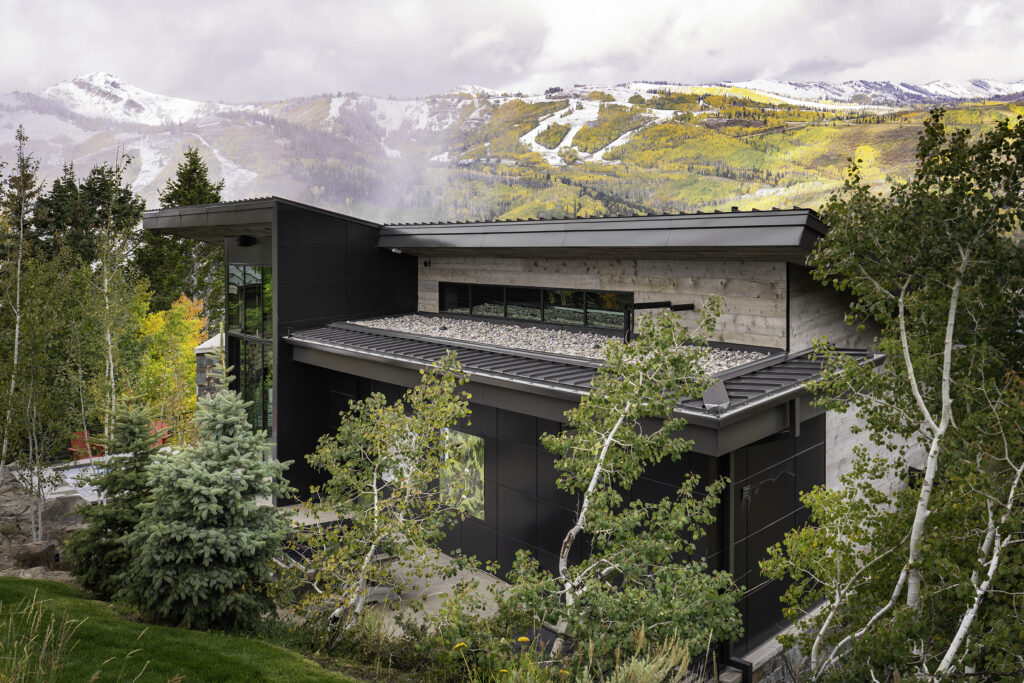
Factors to Consider When Choosing Exterior Materials
While appearance is often the starting point, performance should carry equal weight in the decision-making process. Many of the mountain home design trends featured by Mountain Living reflect this same philosophy, prioritizing materials that not only complement the surrounding landscape but also stand up to the demands of mountain environments.
Before finalizing exterior materials, it’s worth considering:
- Climate exposure
- Snow accumulation
- UV exposure at elevation
- Maintenance expectations
- Material lifespan
- Drainage requirements
- Building envelope performance
A material that performs well in one environment may not always be the best choice in a high-elevation mountain climate. Selecting materials that complement one another both visually and functionally often leads to better long-term outcomes, resulting in homes that are as durable as they are beautiful.
Long-Term Maintenance Matters
One of the most overlooked aspects of exterior design is maintenance.
Some materials require periodic refinishing, painting, or sealing, while others are selected specifically because they demand less ongoing attention. Many modern mountain homes incorporate material combinations that reduce maintenance without sacrificing the high-end appearance homeowners expect.
This is one reason metal roofing, wall panels, natural stone, and engineered exterior products continue to gain popularity throughout Utah.
Final Thoughts
The best exterior material combinations do more than create curb appeal. They help protect the home, improve durability, and support long-term building performance.
For modern mountain homes, successful designs often combine materials such as metal roofing, wall panels, wood accents, and natural stone to create a balance of aesthetics and function.
By considering both architectural goals and environmental demands, homeowners can create exteriors that not only look exceptional but continue performing well for years to come.
Frequently Asked Questions
What exterior materials are most commonly used on modern mountain homes?
Many modern mountain homes combine metal roofing, natural stone, wall panels, wood accents, and engineered cladding systems.
Why are metal roofs popular on mountain homes?
Metal roofing performs well in snow-heavy climates, requires relatively low maintenance, and complements both traditional and contemporary architecture.
Are wall panels good for mountain climates?
Yes. Many wall panel systems offer excellent durability, weather resistance, and compatibility with modern architectural designs.
What is the lowest-maintenance exterior material combination?
Metal roofing, stone, and architectural wall panels are often selected because they require less maintenance than some traditional exterior materials.
How do architects choose exterior material combinations?
Architects typically evaluate appearance, climate performance, durability, maintenance requirements, and how materials contribute to overall building envelope performance.