Understanding Ice Dams and Why They Form
If you own a home in Utah’s mountain communities, heat cable ice dam prevention should be part of your winter planning. Ice dams form when heat escaping through the roof melts snow on the upper portion of the roof surface. That meltwater runs down toward the eave, where the roof surface is colder because it extends past the heated living space below. When the water reaches this cold zone, it refreezes and creates a ridge of ice along the eave line.
As more meltwater runs down and hits that ice ridge, it pools behind the dam. Water sitting on your roof is never good, and when it backs up under panels, shingles, or flashing, it finds its way inside. The result is water-stained ceilings, damaged insulation, mold growth, and wood rot that can go undetected for months.
Metal roofs are not immune to ice dams. While their smooth surface sheds snow more effectively than other roofing materials, the same freeze-thaw cycle applies. In Park City and surrounding areas where winter temperatures swing dramatically from day to night, ice dams are a persistent problem that requires a proactive solution.
How Heat Cable Systems Work
A heat cable system uses self-regulating heating cables installed along the eaves, in valleys, and through gutters and downspouts to maintain a clear melt path for water. When temperatures drop, the cable generates heat to prevent ice from forming in the areas where dams typically develop. When temperatures rise, the cable automatically reduces its output to conserve energy.
Self-regulating cables are the industry standard for roof applications. Unlike constant-wattage cables, which produce the same amount of heat regardless of temperature, self-regulating cables adjust their output based on the surrounding conditions. This makes them more energy-efficient and safer, because they cannot overheat even if sections of cable overlap.
The cables are typically controlled by a thermostat or sensor system that activates them when temperatures fall below a set threshold and deactivates them when conditions warm up. Some systems use moisture sensors in combination with temperature sensors so the cables only run when both cold temperatures and moisture are present. This further reduces energy consumption and wear on the system.
Where Heat Cables Should Be Installed
Proper placement is critical to the effectiveness of a heat cable system. The most important area is the eave, where ice dams form. Cables are run in a zigzag pattern along the lower edge of the roof, extending past the exterior wall line to cover the cold zone where freezing occurs. The exact pattern and spacing depend on the roof pitch and the expected ice dam severity.
Roof valleys are the second priority. Valleys collect runoff from two converging roof planes, making them high-volume water channels. In winter, valleys are prime spots for ice buildup because the concentrated water flow refreezes quickly. Running heat cable through the valley keeps this critical drainage path open.
Gutters and downspouts are the third area that needs coverage. Even if the roof surface is clear, frozen gutters will trap meltwater at the eave and re-create the same pooling effect as an ice dam. Heat cable through the gutter trough and down through each downspout keeps the entire drainage system functional. We also recommend cable coverage behind snow retention systems in areas where snow pack is heaviest.
Heat Cables and Metal Roofing Compatibility
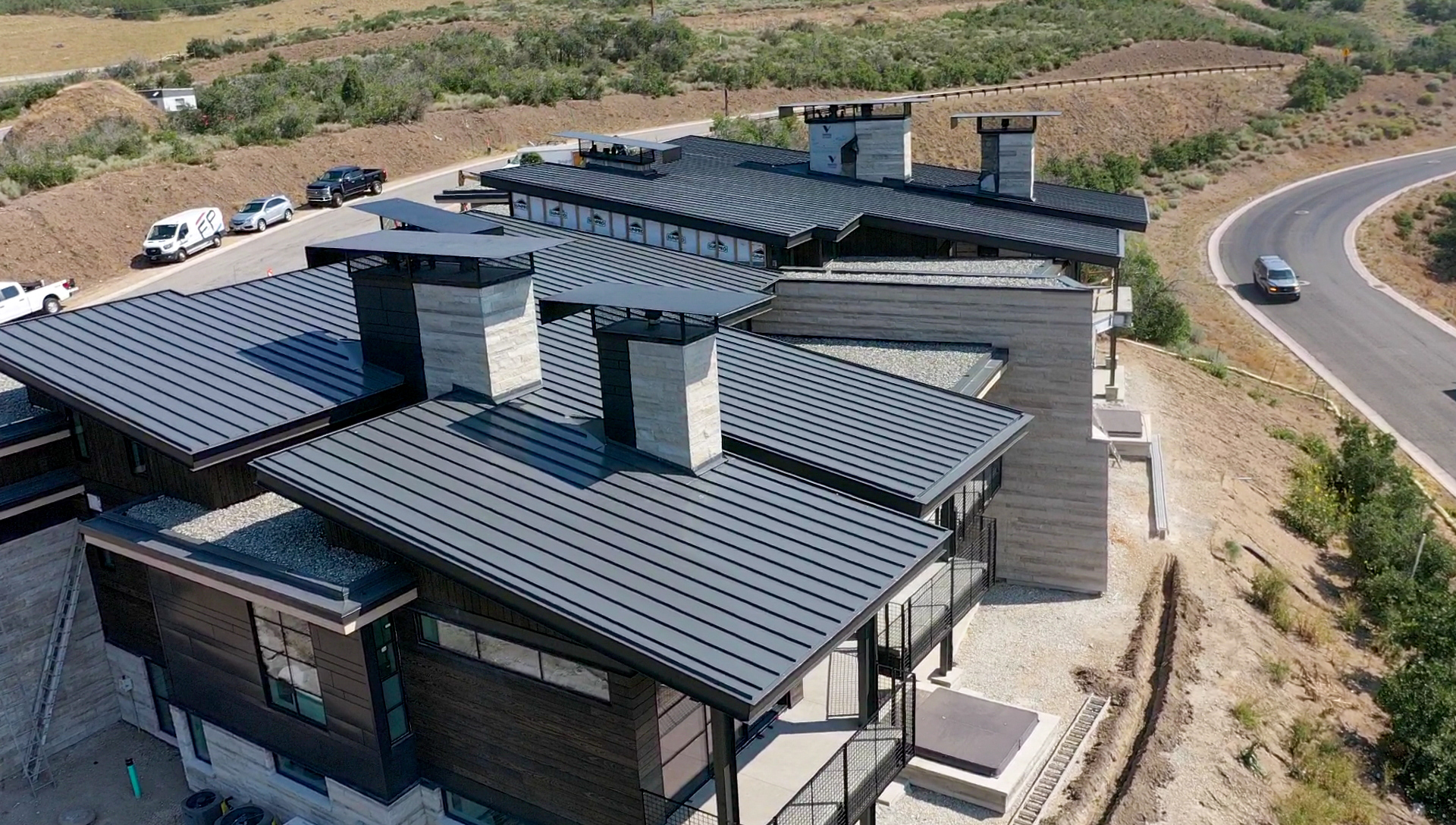
Heat cables are fully compatible with metal roofing systems, but the installation approach varies depending on the panel profile. On standing seam roofs, cables are typically attached using clamps that grip the seam without penetrating the panel. This maintains the integrity of the roof surface and preserves the warranty. On exposed fastener panels, cable attachment may involve adhesive mounts or mechanical fasteners, and care must be taken to seal any penetration points.
Panel material matters as well. Metal is an excellent conductor of heat, which means the warmth from the cable spreads across the panel surface more efficiently than it would on a non-metallic roof. This can actually improve the system’s effectiveness, because each linear foot of cable covers a slightly wider area than it would on asphalt or tile.
At Viotell, we install heat cable systems as part of our building envelope work across the Wasatch Back. We coordinate the cable layout with the roofing panels, flashing details, and snow guard placement so everything works together as a system. Retrofitting heat cable onto an existing roof is possible, but installing it at the same time as the roof is always cleaner and more cost-effective.
Energy Use and Operating Costs
One of the most common questions we hear about heat cable systems is how much they cost to operate. The answer depends on the length of cable installed, the type of control system, and how many hours per winter the cables need to run. A typical residential system in Park City might cost between $150 and $400 per winter season in electricity, depending on the severity of the winter.
Self-regulating cables keep costs down because they draw less power as temperatures rise. A well-designed control system with temperature and moisture sensors prevents the cables from running when they are not needed, which is the biggest factor in managing operating costs. Manual systems that require the homeowner to turn cables on and off tend to either run too much (wasting energy) or not enough (defeating the purpose).
When you compare the operating cost of a heat cable system against the cost of repairing ice dam damage, it is not close. A single ice dam event that causes interior water damage can easily run into thousands of dollars in repairs. The heat cable system pays for itself the first time it prevents that kind of damage.
Choosing the Right System for Your Home
Not every home needs the same heat cable setup. A single-story home with a simple roofline and moderate snow exposure might only need cable along the eaves and through the gutters. A multi-story home with complex geometry, multiple valleys, dormers, and heavy snow loads may need a more extensive layout with cables covering a larger area of the roof.
We design each system based on the specific building. We look at roof pitch, orientation, insulation levels, snow history, and the building’s exposure to wind and sun. A north-facing roof in Midway will have very different heat cable needs than a south-facing roof in the same town, because sun exposure dramatically affects how quickly snow melts and refreezes.
If you are planning a new metal roof or replacing an existing one, we strongly recommend discussing heat cable options during the design phase. It is the most cost-effective time to install the system, and it allows us to integrate the cables with the roofing panels, flashings, and snow guards for a clean, effective result.
Frequently Asked Questions
Do heat cables damage metal roofing panels?
No. When installed correctly using seam clamps or approved mounting methods, heat cables do not damage metal panels. We use attachment methods that maintain the panel’s weather integrity and warranty compliance.
How long do heat cable systems last?
Quality self-regulating heat cable systems typically last 15 to 25 years. The cables themselves are the primary wear component. Control systems and sensors may need replacement or recalibration during that time.
Can heat cables be added to an existing metal roof?
Yes. Heat cables can be retrofitted onto most existing metal roofs. The installation is simpler and cleaner when done during the initial roof installation, but retrofit is a viable option for homeowners dealing with existing ice dam problems.
Do heat cables run all winter long?
With a properly designed control system, no. Temperature and moisture sensors activate the cables only when conditions are right for ice dam formation. This keeps energy use and costs manageable.
Are heat cables worth the investment?
In mountain climates like Park City and the Wasatch Back, absolutely. The cost of operating a heat cable system is a fraction of what a single ice dam repair can cost. For most homeowners in heavy snow areas, it is a straightforward return on investment.
Protect Your Roof From Ice Dams This Winter
We design and install heat cable systems that keep your metal roof clear and your home dry. Contact us to discuss the right system for your property.
References
Building Science Corporation. Understanding and Preventing Ice Dams. https://www.buildingscience.com/