
A building envelope system is the full set of exterior components that separate indoor living space from Utah’s weather. It includes the roof, exterior walls, windows and doors, foundation interfaces, and all the connecting details that keep water out, keep conditioned air in, and support comfort year-round. When the envelope is designed and built as a system, homes perform better in snow, wind, sun, and freeze-thaw conditions.
In Utah, those conditions are not edge cases. They are the baseline. That is why building envelope thinking matters, especially in Park City and other high-exposure areas where snow loads, drifting, and temperature swings can punish weak transitions.
Viotell approaches roofing and architectural metal with an envelope mindset, because the roof, walls, and trim only work when the details work together. This guide explains what the envelope is, what can go wrong, and how the right choices protect performance and long-term value.
Building Envelope Definition: The Parts That Protect the Home
Roof, walls, windows, doors, and foundations
The U.S. Department of Energy describes the building envelope as the parts of a building that separate the inside from the outside, including walls, roof, floor or foundation, windows, and doors.
That definition matters because it shifts the focus from one product to one system. A premium roof cannot overcome a failing roof-to-wall transition. High-end cladding cannot fix an air-leaky window opening. The envelope is only as strong as its weakest connection.
The control layers: water, air, vapor, and thermal
Building science commonly explains envelope performance through four control layers: water control, air control, vapor control, and thermal control.
Those layers can live in different materials, but they must be continuous. Gaps are where moisture, drafts, and durability problems start.
Why Utah’s Climate Raises the Stakes
Freeze-thaw cycles and water intrusion risk
Freeze-thaw is hard on buildings for one simple reason: water expands when it freezes. If moisture gets into cracks, seams, or porous materials and then freezes, the expansion pushes joints apart and worsens pathways for future leaks.
NOAA engineering weather data includes “average annual freeze-thaw cycles” for Utah stations, and those figures can be significant. For example, one Salt Lake City station shows an average annual freeze-thaw cycle count in the data summary.
The practical takeaway: even small leaks can become bigger leaks when the building is repeatedly asked to handle melting, refreezing, and wind-driven moisture.
Snow loads, wind-driven weather, and ice issues
Snow is not only weight on a roof. It also changes how water behaves. Snow drifts against walls, piles at valleys and parapets, melts in the sun, and refreezes at colder edges. Wind can push moisture into terminations and corners that never see direct rain.
That is why envelope work in Utah depends on details that manage water in motion, not only water falling straight down.
High-elevation UV and temperature swings
Utah’s elevation and clear skies can bring strong sun exposure and large daily temperature swings. Those swings drive thermal movement, and movement tests the integrity of sealants, fasteners, and transitions. If the envelope is assembled without room for controlled movement, it can crack, open up, and leak earlier than expected.
The 4 Control Layers Explained in Plain English
Water control: drainage planes, flashings, and exits
Water control is the first priority because bulk water causes the fastest damage. Water control is not one bead of sealant. It is a plan: a water-resistive layer, properly lapped flashings, and clear exit points for any water that gets behind the exterior finish.
Roofing and architectural metal are heavily involved here, especially at eaves, valleys, parapets, wall transitions, and penetrations.
Air control: sealing leaks that drive energy loss
Air leakage is one of the biggest contributors to comfort problems. Drafts, cold spots, and ice-related roof issues can all be tied to uncontrolled airflow. Air sealing is also connected to moisture, because moving air carries water vapor into cavities where it can condense.
Vapor control: avoiding trapped moisture
Vapor control is about preventing moisture accumulation inside assemblies. The right approach depends on the full wall or roof assembly, interior conditions, and climate exposure. The goal is to avoid trapping moisture where it cannot dry.
Thermal control: insulation and continuity
Thermal control means insulation plus continuity. Gaps in insulation, thermal bridges at transitions, and discontinuities at roof-to-wall interfaces can create cold surfaces where condensation can form and where melt-refreeze patterns are more likely.
Where Building Envelopes Fail Most Often in Utah Homes
Roof-to-wall transitions and step flashing
Many leaks start where a roof meets a wall, chimney, or dormer. These areas see complicated water flow, drifting snow, and movement. Step flashing, counterflashing, kick-outs, and wall terminations need to be detailed so water is directed onto the roof surface and out of the system.
This is where metal detailing often makes or breaks performance. For roofing systems, start with metal roofing services and Park City roofing to see how local exposure shapes the approach.
Chimneys, skylights, and penetrations
Every penetration is a risk point. Chimneys and skylights add corners, seams, and water lines. A long-lasting envelope depends on precise flashings, correct underlayment integration, and clean terminations.
Custom components help control these details, which is why custom chimney caps and purpose-built flashing solutions are part of envelope-level roofing work.
Parapets, balconies, and deck connections
Parapets and decks create conditions where snow can drift, meltwater can collect, and water can be driven by wind. Copings, cap flashings, and terminations need drainage paths and secure attachment to handle movement and weather.
Window openings and wall terminations
Windows are high-value openings that require careful flashing integration with the wall’s WRB and drainage strategy. When windows are treated as isolated products rather than integrated parts of the envelope, hidden leaks and air leakage are more likely.
Why Architectural Metal and Roofing Details Matter in the Envelope
How metal roofing supports water management in snow country
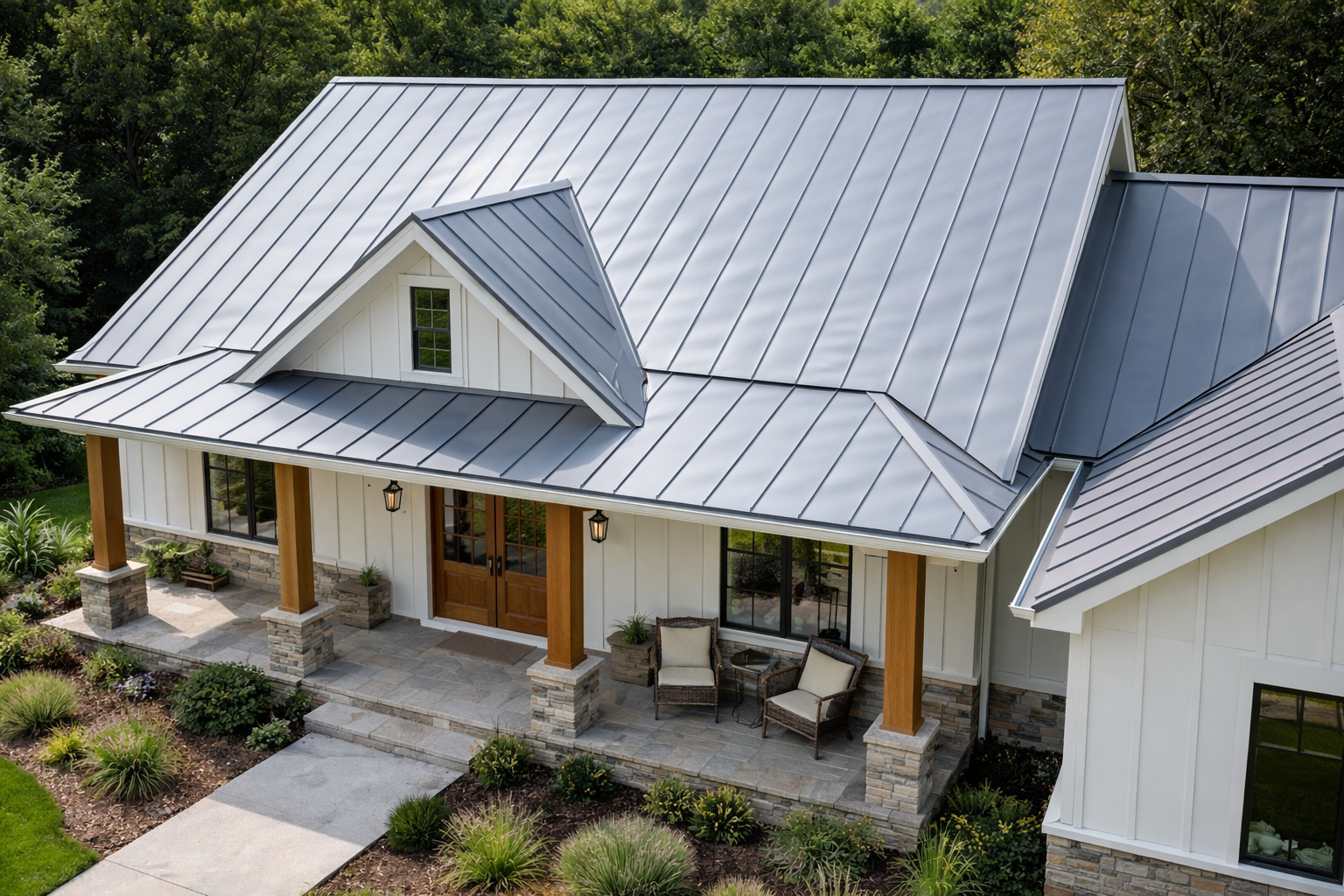
Metal roofing is often chosen in Utah for durability and snow performance, but the envelope benefit comes from the details: valleys, eaves, transitions, and edge conditions. A roof system that is thoughtfully detailed helps manage snow melt, wind-driven moisture, and repeated freeze-thaw stress.
Metal wall panels, rainscreens, and ventilation gaps
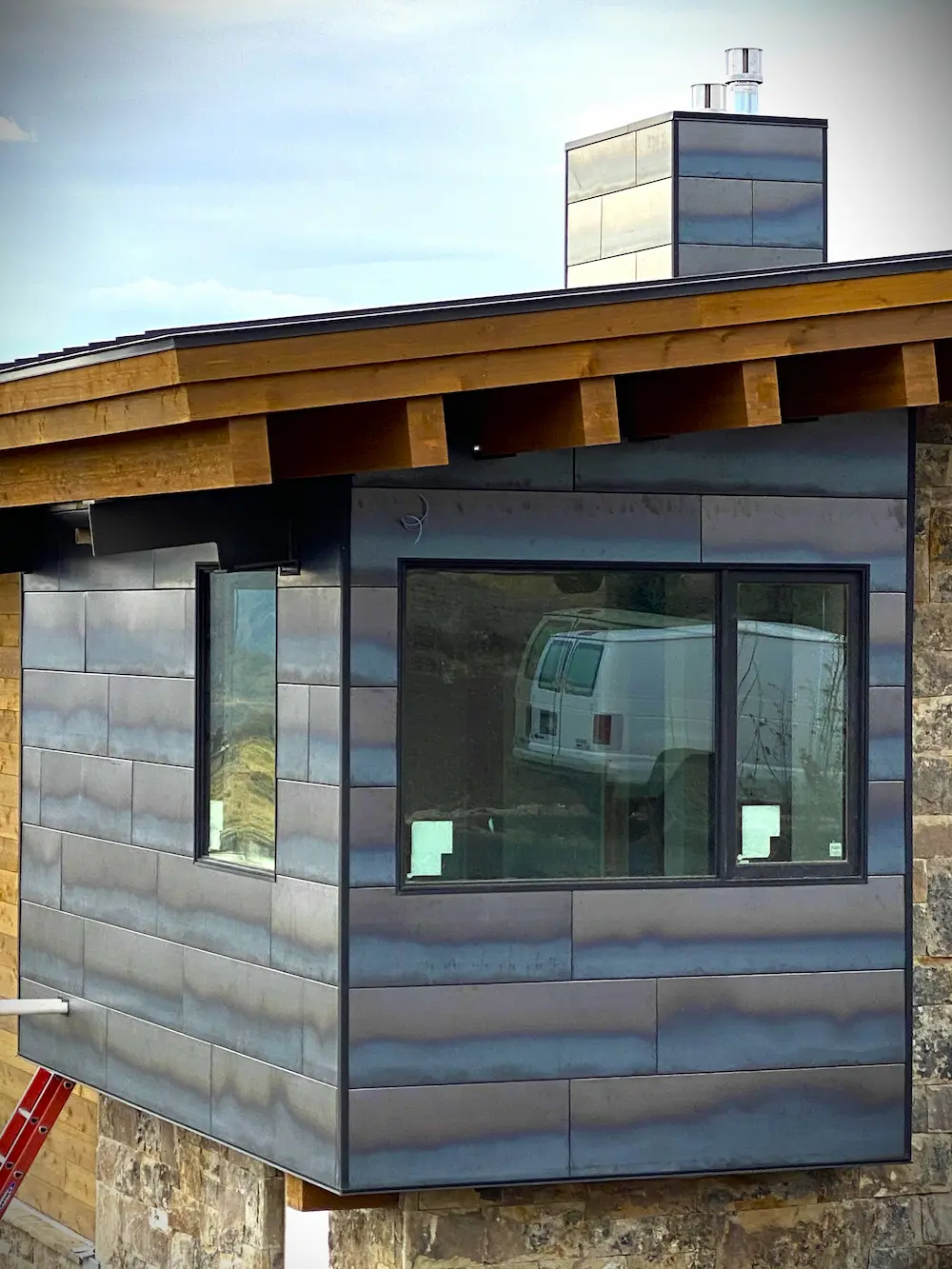
Metal wall panels can be part of a high-performance envelope, especially when paired with a rainscreen strategy that supports drainage and drying. Wall panels are not only visual. They are functional exterior layers that must integrate with air and water control strategies.
For exterior cladding and envelope integration, explore metal wall panels.
Custom flashings, copings, and trim that keep systems tight
Trim is not decoration. It is protection. Copings, fascias, soffits, corner flashings, and terminations are where water control becomes real. The fit and finish of these components affects both appearance and performance.
That is why sheet metal fabrication plays a central role in envelope-level results, especially on complex homes where field conditions rarely match drawings perfectly.
Building Envelope ROI: Comfort, Durability, and Resale Value
Lower maintenance risk through better water control
Water damage is expensive because it hides. When the envelope is designed to drain, dry, and resist wind-driven exposure, the risk of hidden rot and interior damage drops.
Energy performance and reduced drafts
A tighter, better-insulated envelope typically delivers more stable indoor temperatures and fewer drafts. That means the home feels better during winter cold snaps and summer heat, and HVAC systems are under less strain.
Value signaling for Park City and high-end homes
Envelope upgrades are not always visible, but buyers recognize the signals: high-quality roof details, clean metal transitions, and well-executed exterior systems. In premium markets, that level of execution supports confidence, inspections, and long-term ownership planning.
How Viotell Approaches Envelope-Level Projects
Fabrication precision and consistent details
Envelope performance is detail performance. When flashings and trims are fabricated to fit the home’s geometry, transitions are cleaner, water lines are more controlled, and the exterior reads as intentional.
Coordinating roofing, wall panels, and trims
The best envelope work happens when roofing and wall systems are coordinated early. That includes alignment of control layers, termination locations, and drainage paths.
For related guidance and examples, visit Resources.
What to expect from an evaluation and quote
An envelope-focused evaluation looks at the full exterior system, including roof planes, penetrations, roof-to-wall transitions, chimney and skylight details, wall terminations, and areas where snow and water concentrate.
Next Steps for Improving a Utah Building Envelope
If a home is dealing with drafts, ice issues, staining, or recurring exterior repairs, the right move is to step back and evaluate the envelope as a system. That includes identifying weak transitions, confirming how water is supposed to exit, and reviewing how roofing and exterior metal details support the control layers.
To schedule an envelope-focused assessment and get a quote, connect here: Contact Viotell. For service overviews, review metal roofing services and metal wall panels.
FAQ
What is included in a building envelope system?
The building envelope includes the roof, exterior walls, floors or foundation interfaces, windows, and doors, plus the details that connect them.
What is the difference between an air barrier and a vapor barrier?
An air barrier controls airflow through assemblies, which affects comfort and energy use. A vapor control layer helps manage moisture diffusion and condensation risk. Both layers work together, but they solve different problems.
Why do Utah homes have moisture problems in winter?
Winter moisture problems often come from small leaks, drifting snow, ice-related water movement, and warm interior air leaking into cold cavities where condensation forms. Freeze-thaw cycles can worsen openings over time.
Do metal wall panels need a rainscreen gap in Utah?
A ventilated and drained space behind cladding is commonly used to support drainage and drying, especially in climates where water can get behind exterior finishes.
How do roof details affect the building envelope?
Roof details control water at the most exposed surface of the home. Valleys, eaves, penetrations, and roof-to-wall transitions determine whether water exits safely or finds a pathway into the structure.