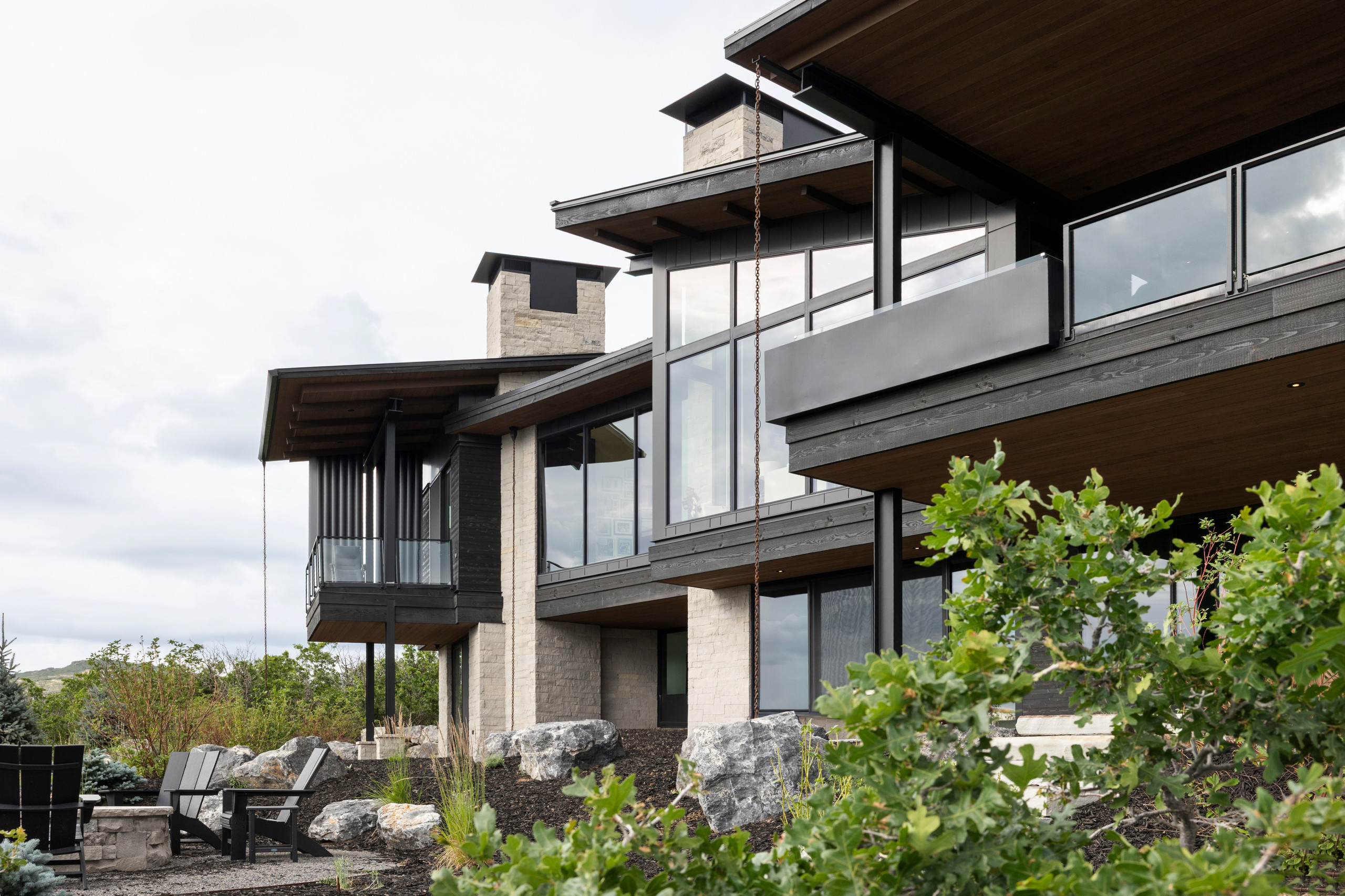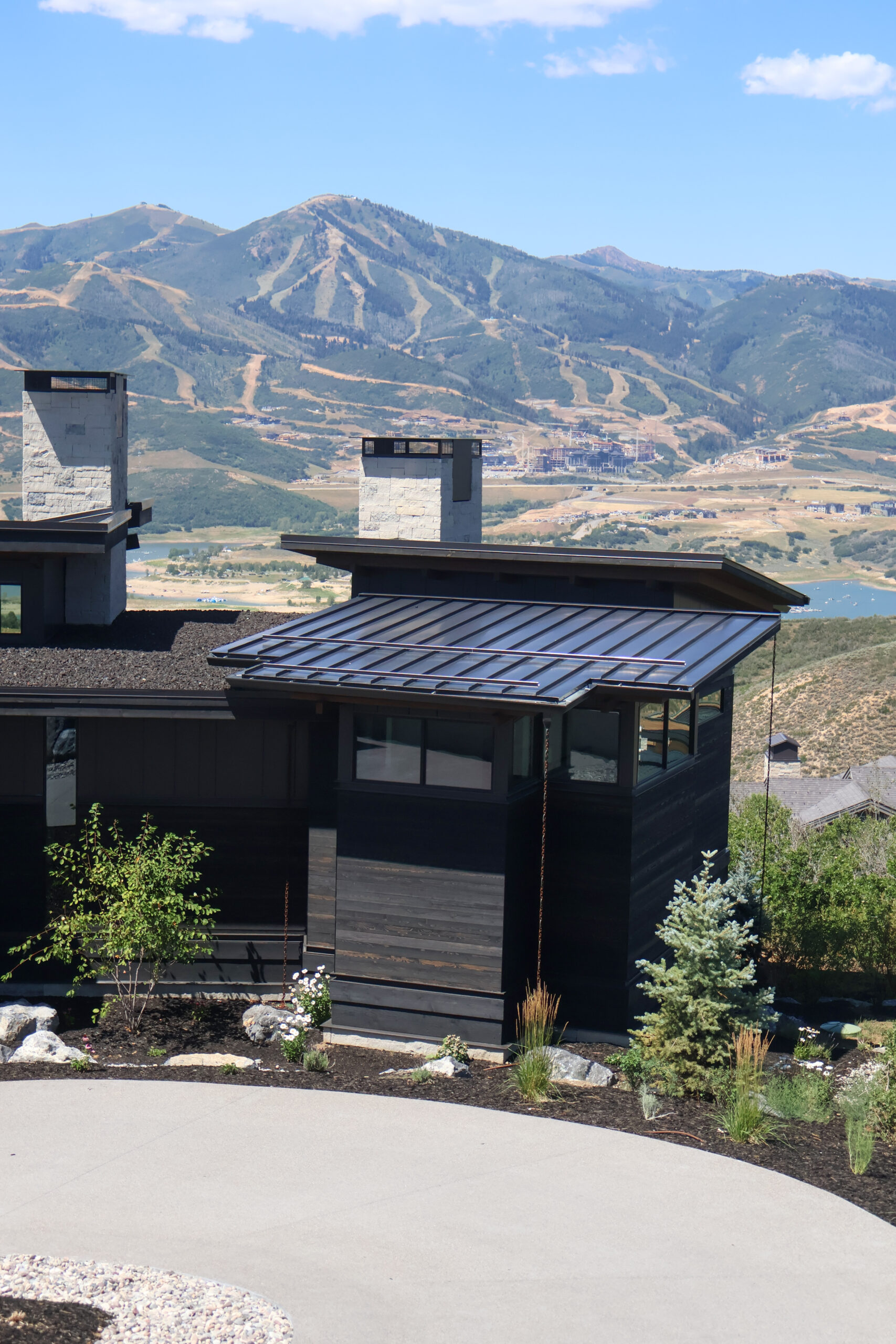

A building’s exterior is only as strong as the weakest connection between its parts. When the roof, wall cladding, insulation, and moisture barriers are treated as separate systems, the transitions between them become vulnerability points. An integrated building envelope approach treats the entire exterior as a coordinated system, where every component is designed to work with the others from the start.
At Viotell Metal Concepts, we specialize in metal roofing and cladding systems that function as part of a unified envelope. For homeowners, builders, and architects working in Utah’s demanding mountain climate, this approach delivers better performance, fewer problems, and longer service life.
What Is a Building Envelope System?
The building envelope is everything that separates the inside of a structure from the outside. That includes the roof, walls, windows, doors, insulation, air barriers, and moisture management layers. Each one plays a role in controlling heat, moisture, air movement, and structural integrity.
An integrated approach means these components are planned together, not independently. The roof ties into the wall. The wall cladding connects to the moisture barrier. The insulation and air sealing work as a coordinated layer. When every connection is accounted for in the design phase, the whole system performs better.
Why Integration Matters in Utah’s Climate
Thermal extremes and insulation continuity
Utah’s mountain regions experience wide temperature swings, from below zero in winter to 90+ degrees in summer. Gaps or misalignment in the insulation layer create thermal bridges, spots where heat escapes in winter and enters in summer. An integrated envelope design maintains insulation continuity from roof to wall, reducing energy loss and improving comfort.
Moisture management across the full envelope
Moisture doesn’t just come from rain. In snowy climates, it comes from snowmelt, ice dams, condensation, and vapor drive. When the roof’s moisture barrier doesn’t connect properly to the wall’s weather-resistant barrier, water can find its way into the wall assembly. Integrated design eliminates those gaps.
Snow and ice at the roof-to-wall transition
The junction where a metal roof meets a metal wall panel system is one of the most critical details on any mountain building. Snow can pile against this transition, and meltwater needs a clear path away from it. When both systems are designed and installed as one envelope, this transition gets the attention it deserves rather than being left to chance in the field.
Components of an Integrated Envelope
Roofing as the first line of defense
The roof handles the most direct weather exposure. Metal roofing, especially standing seam systems, provides a durable, low-maintenance top layer. But a roof is only part of the picture. Underlayment, ventilation, and flashing details all contribute to how well the roof protects what’s underneath. Snow management systems, including snow guards and retention bars, add another layer of performance by controlling how snow leaves the roof.
Wall cladding and rain screen design
Metal wall panels can be installed as rain screen assemblies, where a drainage cavity behind the panel allows any water that gets past the face layer to drain out before reaching the wall structure. This approach works especially well in mountain environments where wind-driven rain and meltwater are constant factors.
Air sealing and vapor control
Air leakage is one of the biggest sources of energy loss and moisture problems in buildings. An integrated envelope includes a continuous air barrier that wraps from the roof assembly into the wall assembly. Vapor barriers and retarders are selected based on the climate zone and positioned correctly within the wall and roof assemblies to prevent condensation inside the structure.
Flashing and transition detailing
Flashings are the connective tissue of the building envelope. Every penetration, every change in material, every corner and edge needs a flashing detail that keeps water out and allows the system to move with thermal changes. Custom sheet metal fabrication allows these details to be built to the exact dimensions of the project, rather than relying on generic off-the-shelf pieces.
The Cost of Treating Systems Separately
When roofing and cladding are handled by different contractors with no coordination, the transitions between them often get the least attention. That’s where leaks start. That’s where insulation gaps appear. That’s where long-term performance breaks down.
Fixing these issues after the fact is expensive and disruptive. Replacing flashing at a roof-to-wall transition on a finished building means tearing into both systems. Addressing condensation problems inside a wall assembly means opening up cladding and potentially replacing insulation. An upfront investment in integrated design avoids these costs.
How Viotell Approaches Envelope Projects
Viotell handles metal roofing, wall panels, fabrication, and installation under one team. That means the people designing the roof are coordinating with the people installing the cladding, and all of the custom components come from the same fabrication facility. For architects and builders, this reduces the coordination burden and produces tighter, more consistent results.
If you’re working on a project where the envelope needs to function as a single system, contact our team to talk through the details.
FAQ
What does ‘building envelope’ include?
The building envelope includes the roof, walls, windows, doors, insulation, air barriers, and moisture control layers. It’s everything that separates conditioned interior space from the exterior environment.
Why is the roof-to-wall transition so important?
This transition is where two major systems meet, and it’s where most water intrusion problems occur. When designed and installed as part of an integrated envelope, this joint is properly flashed, sealed, and detailed to prevent leaks.
Can Viotell handle both roofing and wall panel installation?
Yes. Viotell installs metal roofing and metal wall panels and coordinates them as a single system. This eliminates the gaps that occur when separate contractors handle each part independently.
Does integrated envelope design cost more upfront?
There may be some additional design and coordination cost, but it’s typically offset by fewer field changes, fewer callbacks, and significantly lower long-term repair costs. The upfront investment protects the building for years.
Is this approach only for new construction?
No. Integrated envelope thinking can be applied to re-roofing and recladding projects as well. When replacing a roof or upgrading wall panels, it’s the right time to address transition details and bring the systems into alignment.
References
Building Science Corporation. Building Enclosure Design Principles.
Building America Solution Center. Air Sealing and Insulation Guidance.