
Modern home design in Park City has shifted toward cleaner lines, larger forms, and a more intentional relationship between materials. Roofing plays a central role in that shift, even though it is often thought of primarily as a functional element.
In practice, the roof is one of the most visually defining components of a home. Its shape, material, and detailing influence not only how the structure performs, but how it is perceived architecturally. In mountain environments, that relationship becomes even more important because design decisions must also account for climate.
Why Roofing Matters in Modern Design
In traditional construction, roofing was often treated as a separate layer, something that sat on top of the structure without significantly influencing the overall design. Modern architecture takes a different approach.
Roofing is now part of the architectural language. It works alongside wall panels, glazing systems, and structural elements to create a cohesive exterior. In Park City, where homes are often designed to complement the landscape, the roof becomes a defining feature rather than a background element.
Clean Lines and Simplified Roof Forms
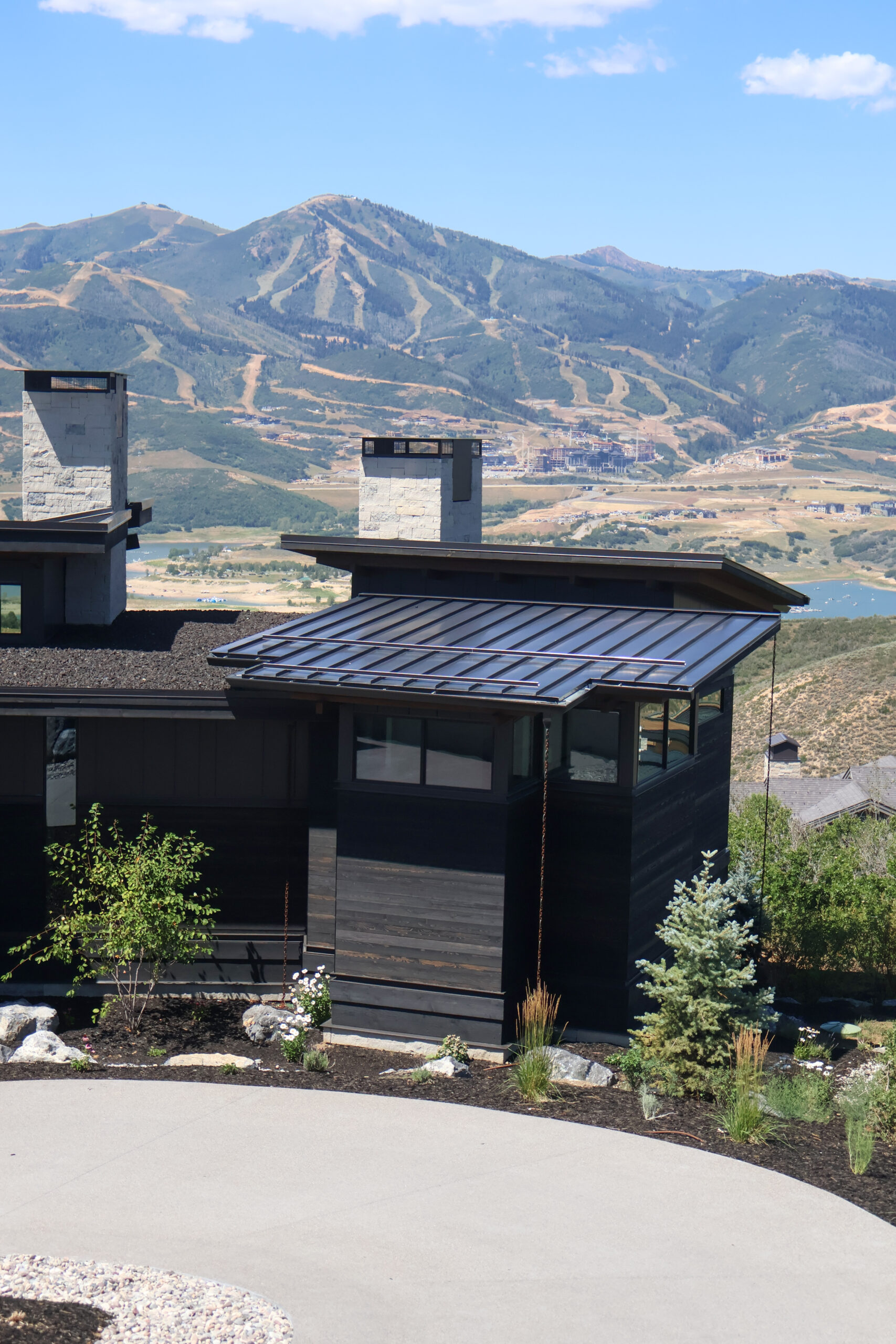
Modern homes tend to emphasize simplicity in form, which often leads to more intentional roof design. Low-slope planes, single-slope roofs, and extended overhangs are commonly used to create a streamlined appearance.
These design choices reduce visual complexity but increase the importance of execution. Roofing systems must support continuous lines and consistent spacing, without introducing unnecessary breaks or transitions that disrupt the design.
Because of this, both material selection and installation precision play a significant role in achieving the intended architectural result.
Material Selection and Visual Impact
The roofing material used on a modern home influences both performance and overall appearance.
In Park City, materials commonly used in modern residential design include standing seam metal, flat-lock panel systems, and high-performance membranes for low-slope sections. These systems are often selected because they create clean, uninterrupted lines and integrate well with contemporary exterior materials.
Color and finish also contribute to the final look. Darker tones are often used to blend with the surrounding environment, while matte finishes help control reflectivity at higher elevations where sunlight is more intense.
Integration With Wall Panels and Cladding
Modern architecture often blurs the line between roof and wall.
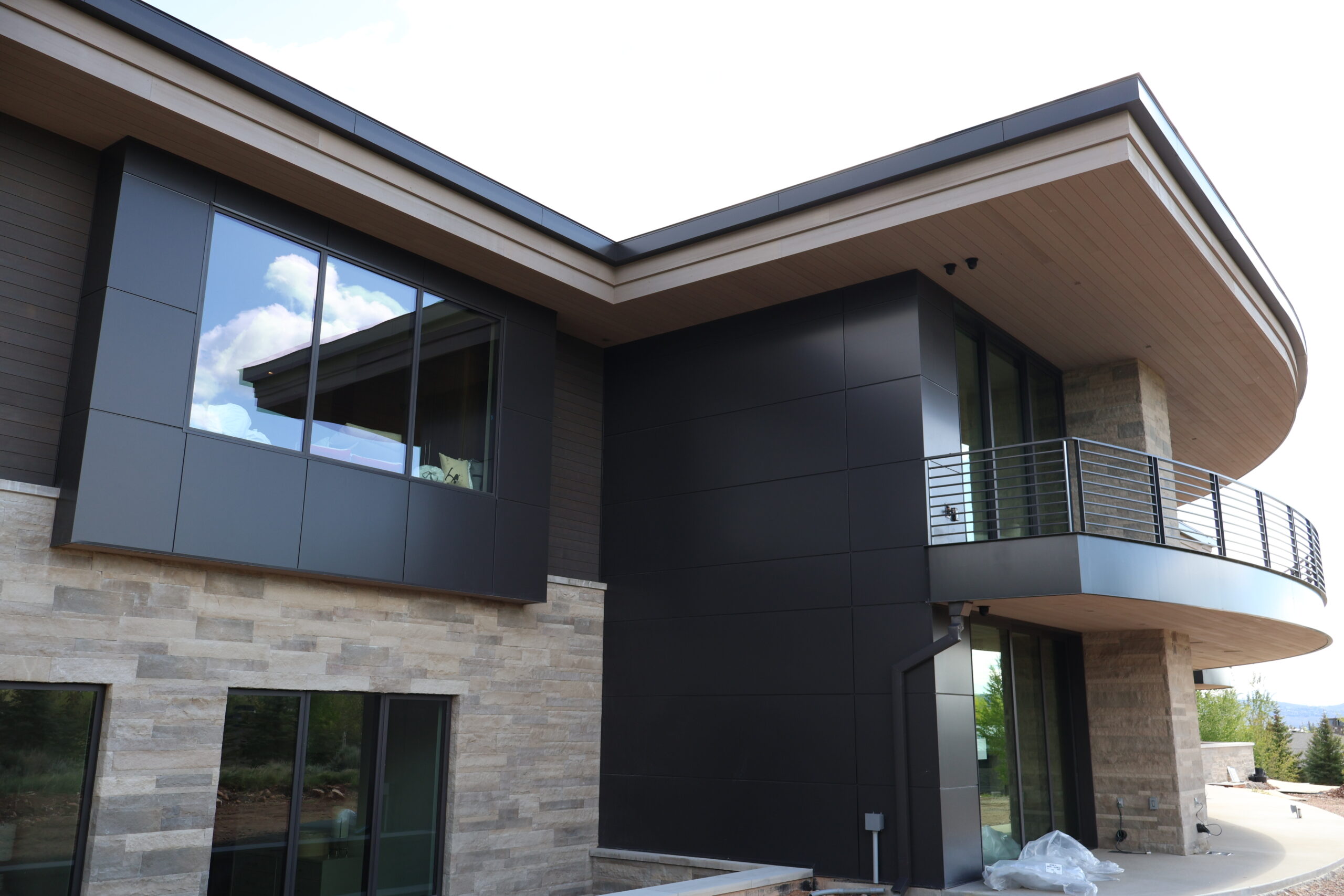
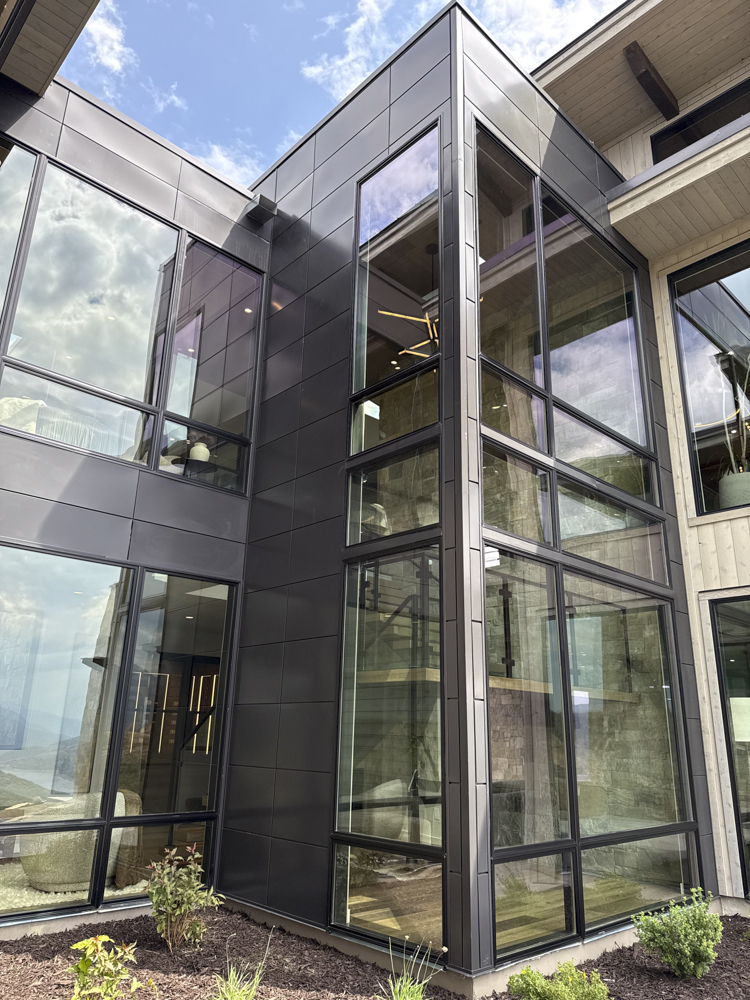
Rather than treating these surfaces separately, many homes use materials that transition seamlessly from the roof down the exterior walls. This approach creates a unified building envelope and reinforces the design intent.
Achieving this requires careful coordination between roofing and cladding systems. Transitions must be detailed in a way that maintains both water control and visual continuity, which is especially important in a climate like Park City where moisture movement is a constant consideration.
Roof Detailing and Architectural Precision
As designs become simpler, details become more visible.
Elements such as roof edges, flashing lines, panel alignment, and transitions around windows or penetrations are no longer hidden within complex forms. Instead, they become part of the visual composition of the home.
Because of this, small inconsistencies in installation can have a noticeable impact. Precision in layout and detailing is essential, not just for performance, but for maintaining the integrity of the design.
Balancing Design With Performance
While modern design emphasizes aesthetics, roofing in Park City must still perform under demanding environmental conditions.
Homes in this area are exposed to snow load, moisture from seasonal runoff, freeze and thaw cycles, and high levels of UV exposure. These factors place stress on both materials and detailing.
A well-designed roofing system balances these performance requirements with architectural goals. The most successful projects are those where neither function nor design is compromised.
What Homeowners and Designers Should Consider
When planning a modern home in Park City, roofing should be part of the conversation early in the design process.
Important considerations include:
- how the roof integrates with the overall architectural concept
- compatibility between roofing and wall systems
- long-term maintenance expectations
- performance under local climate conditions
- the level of precision required during installation
Addressing these factors early allows for better coordination and more consistent results.
Final Thoughts
Roofing plays a larger role in modern home design than it often receives credit for. In Park City, where architecture and environment are closely connected, the roof influences both how a home performs and how it is experienced visually.
When roofing is considered early and executed with precision, it becomes an integral part of the design rather than a separate component added at the end.
Frequently Asked Questions
What type of roofing is best for modern homes in Park City?
Modern homes in Park City often use standing seam metal, flat-lock panel systems, or low-slope membrane systems. The best choice depends on the home’s design, slope, and how the roof integrates with other exterior materials.
Why is roofing important in modern home design?
Roofing plays a major role in defining the overall look of a modern home. Clean lines, material continuity, and precise detailing all depend on how the roofing system is designed and installed.
Can roofing materials be used on both the roof and walls?
Yes, many modern homes use materials that transition from the roof to the walls. This creates a unified exterior, but it requires careful detailing to ensure proper drainage and long-term performance.
How does climate affect roofing design in Park City?
Snow load, freeze and thaw cycles, moisture movement, and UV exposure all influence how a roof should be designed. These factors impact material selection, slope, drainage, and detailing.
What matters more—design or performance?
Both are important, but long-term success depends on balancing the two. A well-designed roof should meet architectural goals while also performing reliably in the local environment.