What Chemicals Can Damage Aluminum Composite Panels? A Guide to Pest Control Treatments
When choosing architectural metal panels, a lot of attention goes into the material, finish, and installation. But what happens after the project is complete matters, too. Everyday maintenance products, including certain pest-control treatments, can affect how those finishes look and perform over time.
Pest control is a pretty routine part of maintaining a property, especially in resort communities and larger residential developments. What isn’t always considered is how those treatments interact with the building’s exterior materials. Certain chemicals used in insecticides can be harsh on factory-applied ACM finishes, particularly when they’re sprayed directly onto the panels, left on the surface to dry, or applied repeatedly without rinsing.
It really comes down to what’s in the product. Beyond the main pesticide ingredient, many formulations contain solvents, oils, and other additives that may not be compatible with certain metal finishes. When sprayed directly onto panels, these ingredients can leave stains, change the appearance of the finish, or cause more serious damage over time.
Understanding how these chemicals interact with architectural metal finishes can help property managers, contractors, and building owners prevent avoidable damage.
Can Chemicals Damage Aluminum Composite Panels?
Yes, certain pest-control products can affect the factory-applied finishes on aluminum composite metal (ACM) panels. It really depends on what’s in the product, how concentrated it is, and how long it stays on the surface.
Products like ALUCOBOND, ALPOLIC, and Alfrex are designed with protective finishes that hold up against years of sun exposure, moisture, and changing weather conditions. But just because a finish is built for the outdoors doesn’t mean it’s resistant to every chemical it comes into contact with.
Some pest-control products contain petroleum-based ingredients, solvents, and other additives that may not work well with certain architectural coatings. Spraying these products directly onto the panels, applying them repeatedly, or allowing them to sit and dry on the surface can increase the chance of damage.
Depending on the product and the type of finish, you may start to notice streaking, hazy spots, discoloration, or changes in the panel’s gloss. In more serious cases, the chemicals can affect the finish itself, which may require further evaluation by the panel or coating manufacturer.
Importantly, not every pest-control treatment will damage ACM. Compatibility depends on the complete product formulation and the specific finish applied to the panels.
Why ACM Panel Finishes Can Be Sensitive to Chemical Exposure
Aluminum composite panels are commonly used on building exteriors because they’re lightweight, durable, and offer a clean, finished appearance. The exterior surface is coated at the factory, with the finish selected to provide both the desired look and protection against everyday weather conditions.
There are a few different coating types used on ACM panels, including PVDF, FEVE, and polyester finishes. Each has its own performance characteristics, particularly when it comes to color retention, weather resistance, and how it responds to different chemicals.
PVDF finishes are especially popular in architectural applications because they hold their color well and stand up to years of sun exposure and changing weather. However, even these high-performance coatings have their limits. They’re not automatically resistant to every solvent, cleaning product, or chemical treatment that may come into contact with the surface.
It’s an important distinction to understand. A finish designed to handle years of outdoor exposure isn’t necessarily designed to handle concentrated chemicals being sprayed directly onto it.
That’s why it’s worth considering chemical compatibility whenever pest-control companies, cleaning crews, or other maintenance contractors are working around buildings with architectural metal panels.
Which Chemicals Can Damage Aluminum Composite Panels?
Not all pest-control products are made the same, and the potential for damage often comes down to what’s actually in the formulation. Certain ingredients can be harder on architectural coatings than others, which is why it’s important to look beyond the product label and understand what is being applied to the building.
A few ingredients are worth paying attention to when it comes to ACM panels and other finished metal surfaces.
Petroleum distillates and hydrocarbon solvents: These can be found in some solvent-based insecticides and specialty treatments. Depending on the coating, they may cause staining, changes in gloss, or deterioration of the finish.
Aromatic solvents: Ingredients such as xylene and toluene are used in certain industrial and specialty chemical products. These solvents can be particularly aggressive toward some coatings, so they should never be used on ACM panels without checking with the manufacturer first.
Strong alkaline or acidic compounds: Some cleaning products and specialty treatments contain highly acidic or alkaline ingredients that can affect the surface of architectural panels. Depending on the formulation, they may cause discoloration, etching, or damage to exposed aluminum.
Oils and emulsifiers: Certain insecticides and horticultural treatments contain oils or emulsifying agents that can leave residue behind. If not properly addressed, this residue may contribute to staining or changes in the panel’s appearance.
Oxidizing chemicals: Some disinfectants and specialty treatments contain oxidizing ingredients that may affect the appearance or integrity of a coating, particularly when used at higher concentrations or left on the surface for extended periods.
It’s also worth mentioning that a water-based pesticide isn’t automatically safe for metal panels, but that doesn’t mean it’s automatically harmful either. Many common perimeter treatments use pyrethroid insecticides, which can be formulated with water. The other ingredients in the product, including surfactants, solvents, and additives, can influence how it interacts with the finish. That’s why looking at the complete formulation is more useful than judging a product by its active ingredient alone.
Before any pest-control or chemical treatment is applied around ACM panels, it’s a good idea to review the product’s full formulation and check it against the coating manufacturer’s recommendations. A little extra coordination beforehand can help prevent damage that may be difficult or expensive to correct later.
Does PVDF-Coated ACM Resist Chemical Exposure?
PVDF coatings are popular in architectural metal applications for a reason. They’re known for holding their color, maintaining their appearance, and standing up to years of sun exposure and changing weather conditions. High-performance 70% PVDF systems, such as Sherwin-Williams Fluropon, are designed to provide long-term color and gloss retention while offering resistance to weathering, staining, and many chemical exposures.
But there’s a difference between a finish that holds up well outdoors and one that’s resistant to every chemical it might come into contact with.
Even high-performance PVDF coatings can be affected by certain aggressive solvents or concentrated chemical products. Just because a panel is designed to handle years of exposure to the elements doesn’t mean it’s protected from every cleaning agent or pest-control treatment. At the same time, chemical exposure doesn’t automatically mean the coating has been damaged. The actual risk depends on the product formulation, concentration, contact time, and coating system.
This is something to keep in mind with ACM products from manufacturers like ALUCOBOND, ALPOLIC, and Alfrex, too. The brand of panel alone doesn’t tell you how it will respond to a particular chemical. The actual coating, finish system, and manufacturer’s maintenance recommendations all play a role.
For contractors and property managers, this is worth considering when putting together maintenance plans, especially on buildings with large areas of architectural metal cladding. Knowing what products are being used around the exterior can go a long way toward protecting the original finish.
How to Properly Clean and Maintain ACM Panels
Keeping architectural metal panels looking their best doesn’t have to be complicated, but using the right cleaning products makes a difference. Even routine cleaning can cause problems if the wrong chemicals or materials are used on the surface.
For general cleaning, most ACM manufacturers recommend a mild, diluted detergent followed by a thorough rinse with clean water. It’s best to stay away from abrasive scrubbers, harsh solvents, and cleaning products that haven’t been approved for the specific finish.
ALUCOBOND’s technical cleaning resources provide guidance on caring for factory-finished panels, including products and cleaning methods that should be avoided. Certain solvents, including acetone, are not recommended for painted finishes, and petroleum-based solvents require particular caution. This is a good reminder that not all cleaning products are suitable for architectural metal panels.
Cleaning recommendations can also vary between manufacturers, so it’s important to follow the instructions for the specific panel system installed. ALPOLIC’s cleaning instructions provide additional guidance on maintaining the appearance of finished aluminum composite panels.
If a pest-control product or another chemical comes into contact with the panels, don’t immediately reach for a stronger cleaner to remove it. Adding more chemicals can sometimes make the problem worse. Instead, find out what product was used and check the manufacturer’s cleaning recommendations before attempting to remove any residue.
It’s also a good idea to test an approved cleaning method on a small, less visible area first. This helps confirm that the process won’t affect the appearance of the finish.
A little communication before maintenance work begins can also go a long way. Property managers and contractors should let pest-control companies, cleaning crews, and other service providers know when a building has finished architectural metal panels. Making sure everyone understands what materials they’re working around can help prevent unnecessary exposure and avoidable damage.
What to Do If Pest Control Chemicals Damage Metal Panels
If you start noticing discoloration, hazy spots, streaking, or other changes to the panels after a pest-control treatment, it’s worth taking a closer look before trying to clean or repair anything.
Start by finding out exactly what product was used. Ask the pest-control company for the product name, EPA registration number and pesticide label information, dilution ratio, and Safety Data Sheet (SDS). This information can help determine which ingredients were involved and whether they may be incompatible with the panel’s finish.
It’s also important to understand how the product came into contact with the panels. Was it sprayed directly onto the metal, did it run down from an adjacent stone surface or soffit, or was there overspray during application? How long the product remained on the surface is another important detail when evaluating potential damage.
Next, take photos of the affected areas and document where the changes are showing up. Pay attention to any patterns across the panels. Streaking, drip marks, or concentrated areas of discoloration may help show where the chemical made contact or how it traveled down the exterior.
One thing to keep in mind is that visible staining doesn’t always mean the factory finish has been permanently damaged. Sometimes what’s left behind is chemical residue that can be removed with an approved cleaning method. In other cases, the chemical may have actually affected the coating. Knowing the difference is important before deciding what needs to happen next.
Before attempting any aggressive cleaning, polishing, or repairs, reach out to the panel manufacturer or coating supplier for guidance. Using the wrong cleaning method can make the damage worse and make it harder to determine what originally happened to the finish.
Protecting Architectural Metal Finishes Over Time
Architectural metal is built to last, but keeping it looking its best takes some attention after installation, too. The materials, finishes, and details selected for a project all play a role in how the exterior performs over time, and knowing how to properly care for them is just as important.
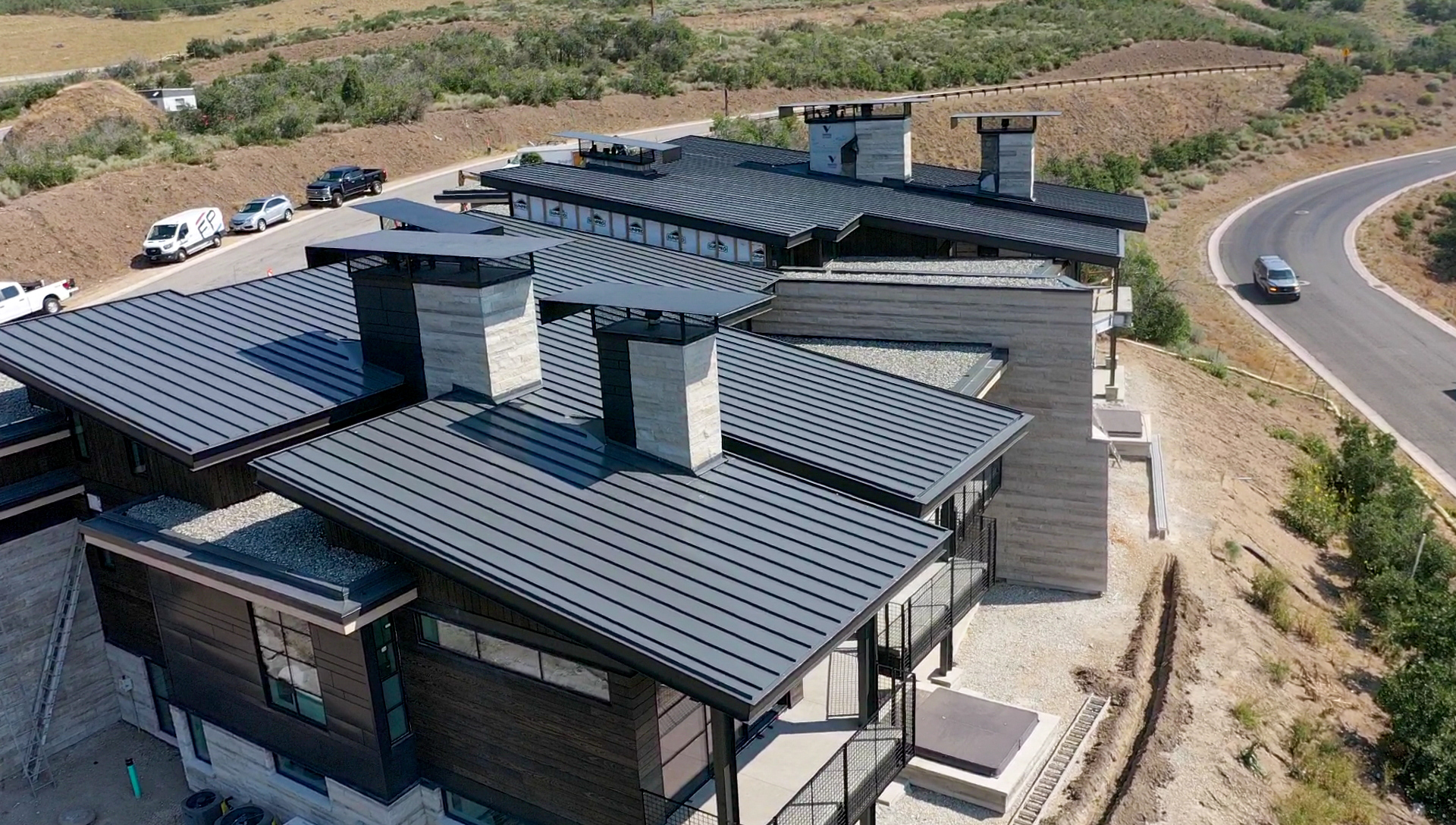
For buildings with ACM panels, standing seam roofing, and custom metal details, that means being mindful of the products used around the exterior. Pest-control treatments, exterior cleaning, and even routine landscaping maintenance can introduce chemicals that may not be compatible with certain metal finishes.
A little coordination between property managers, contractors, and maintenance crews can help prevent unnecessary exposure and avoid damage that could be difficult or expensive to correct.
At Viotell, we know there’s a lot more to an architectural metal system than what you see once the project is complete. The materials, finishes, and craftsmanship all deserve the right care long after installation. Taking the time to understand how those materials should be maintained helps protect the finished project and the details that went into it.
Frequently Asked Questions
1. Does the type of ACM panel finish affect its chemical resistance?
Yes. Different coating systems, including PVDF, FEVE, and polyester, have different performance characteristics. The finish specified for a project can influence how the panels respond to chemical exposure, which is why it’s important to know which coating system was installed.
2. Should pest-control companies be notified before treating a building with metal cladding?
Yes. Letting pest-control providers know which exterior materials are installed gives them an opportunity to review their products and application methods before treatment. This is especially important when chemicals may come into contact with finished metal surfaces.
3. Can chemicals sprayed on nearby surfaces affect metal panels?
Yes. Chemicals applied to adjacent surfaces, such as stone, windows, soffits, or landscaping, can sometimes run onto metal panels or come into contact with them during application. Overspray and runoff should be considered when planning exterior maintenance.
4. Does architectural metal require special maintenance?
Architectural metal generally requires relatively simple maintenance, but the cleaning products and methods should be appropriate for the specific material and finish. Following manufacturer recommendations helps preserve the appearance and performance of the exterior.
5. Who should evaluate discoloration on factory-finished metal panels?
The panel manufacturer, coating supplier, or a qualified architectural metal contractor can help evaluate visible changes to a finished surface. Identifying the source of the discoloration and determining whether the coating itself has been affected are important steps before deciding on repairs.